Showing posts with label Saab. Show all posts

Saab Sports Cars Sedan Concept By Youngho Jong Design For 2025

Saab Sports Cars Sedan
Saab Sports Sedan Concept By Youngho Jong Design For 2025
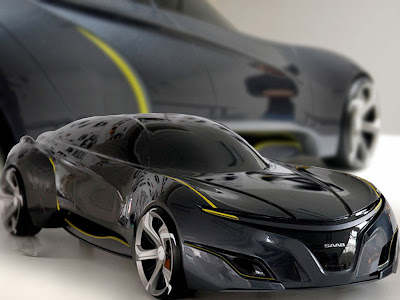
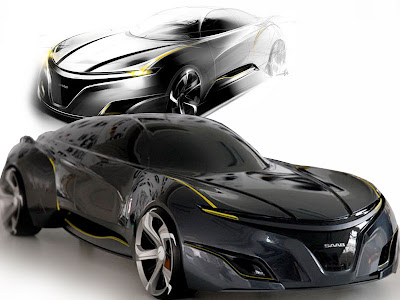
Very clever, The Korean design student Youngho Jong is looking towards Saab�s future with his 2025 Advanced Warning System Vehicle concept, a rakish, four-door sport saloon, sport sedan with sport car coupe-like styling.
Saab Sports Cars Sedan
Saab Sports Cars Sedan Concept By Youngho Jong Design For 2025
Jong�s goal was to design a vehicle that would warn other drivers of impending danger. With his research showing that 50% of vehicles accidents are caused by carelessness, excessive speed and tailgating, Jong wanted to create a car that would warn other drivers to back off and drive with care.
Jong has put together a design for a 2025 Saab Concept that combines the elements of nature and human psychology fit to warn other vehicles of any impending danger. The 2025 Advanced Warning System Vehicle concept is a four door saloon that comes with various warning signals to alert other drivers when he vehicle is getting too close or is driving recklessly. The same amber slips are found on the front and sides of the vehicle. Jong took his inspiration from nature�s Fire Salamander, which uses its bright, menacing colours to ward off potential predators.
Saab Sports Cars Sedan
Saab Sports Cars Sedan Concept By Youngho Jong Design For 2025
Jong also mentions that the coolest part of this Saab Sport Sedan Concept is the body that is made of a soft, impact absorbing material that reduces pedestrian injuries and vehicle damage in collisions. He incorporate sharp edges and the colours red and yellow to further emphasises the possible danger.
Saab Sports Cars Sedan
All of this, it�s a very clever, if far-fetched solution to a very real problem we face in the world today. The technology Saab Sports Cars Sedan Concept By Youngho Jong Design For 2025 isn�t quite there yet, but it�s not too hard to believe that cars twenty years hence will use a system like this.
Saab Sports Cars SedanSaab Sports Cars Sedan
Saab Sports Cars Sedan Concept By Youngho Jong Design For 2025

2012 Saab 9-4X confirmed for LA debut in November

Saab 9-4X Concept

We've been expecting this announcement to come sooner or later, though we didn't exactly count on it coming from the LA Auto Show's own Twitter page. But there it is anyway, straight from the horse's mouth: "Saab has confirmed that the 9-4X Crossover will make its world debut at the LA Auto Show this Nov."

We're also expecting some sort of official word that the new crossover 'ute, which will share its Theta Premium underpinnings with the Cadillac SRX, should hit the market sometime in the spring of 2011... perhaps around April.

While we're on the subject of expectations, we'd also imagine that Saab will offer its premium crossover with the same powerplants as the recently released 9-5, which means we could see a 2.0-liter turbocharged four and a 2.8-liter turbocharged six, both likely mated with a six-speed automatic transmission and available all-wheel drive. We'll apparently find out for sure soon enough.


[Source: LA Auto Show's Twitter]

2010 saab 9-5

2010 saab 9-5 1


The 2010 saab 9-5 skin distinctive styling with a bold front end and a sleek profile. Overall, the project is pretty much what we estimated but there are several interesting touches such as blackened A-pillars and night decrease across the top of the border windows. At the rear, the sloping C-pillars help to give 9-5 a dramatic appearance which extend helped by obvious LED taillights.


Inside, the lodge boasts traditional Saab plan cues such as a �7? console, phobia air vents, and a midpoint console-mounted ignition. Other styling touches embrace glossy black embellish, aggressively bolstered seats, and a thick-rimmed steering controls. On the options slant, we can think a rear seat entertainment organism, bi-xenon headlights, a Harman Kardon audio order, keyless opening, and a large 8-inch navigation order from Panasonic.


Basing on a sportier account of GM�s Epsilon II platform, the 2010 saab 9-5 rides on a 2.84 gauge (111.8?) wheelbase which should offer masses of span in the passenger compartment. The swell in room also extends to the truck, where goods post trial a healthy 513 liters (18.11 cubic feet).


Engine options will compose a three turbo charged petrol units: a 1.6-liter four cylinder with 160hp, a 2.0-liter four cylinder with 210hp, and a 2.8-liter V6 with 300hp. Diesel brawn will be provided by two 2.0-liter units which will fabricate 160 hp and 190 hp. Eventually a petrol-electric fusion is projected, as is a biofuel paradigm.

Saab Fashionista Concept

Saab Fashionista Concept


This conceptual proposal for a Chevrolet Volt-based Saab coupe from Mayeul Walser, a 4th year Car Design student is a good example. You may or may not like the design, but the idea of an aggressively styled hybrid Saab coupe is more than engaging. Saab Fashionista Project Carscoop According to Mayeul's description, the concept behind the Saab Fashionista's design was to create a luxurious four-seater coupe that blends the futuristic feel of sci-fi movies with the elegance of products from renowned fashion houses such as Karl Lagerfeld and Chanel.

The 24-year-old design student also claims that while based on the platform of the Volt, he designed the Fashionista to be equipped with a hybrid powertrain coupling a V6 gasoline engine to an electric motor for a (purely theoretical) output of around 300HP.

If it was our choice, we would have opted for a more powerful version of the Volt's plug-in hybrid powertrain to make the project more feasible, but then again, since this is only a pipe-dream concept, why not go for a V6.

SAAB 91 Concept

SAAB 91 Concept
The Saab enthusiast group, which can be found on Facebook, sprung up before the tie-up between Saab and Spyker N.V. with the goal of developing through an open collaboration similar to the Open Source movement a small hatchback model that could potentially save the company. The SAAB 91 concept targets the likes of the MINI and the more recent Audi A1, measuring -according to Ferrante - 3,870 mm long, 1,420mm tall and 1,700 mm wide. Notable styling features -of the admittedly well executed from a technical standpoint- concept include the classic wraparound windscreen, the pronounced wheel arches and the drooping, teardrop rear window that brings to mind the Hyundai Genesis Coupe. For the time being, the group has finished the car's exterior styling and will now concentrate on the interior design. The overall look deliberately avoids any r�tro element, adopting the current design language of the brand, inspired by concept cars such as the BioHybrid and Aero X.

The Saab enthusiast group, which can be found on Facebook, sprung up before the tie-up between Saab and Spyker N.V. with the goal of developing through an open collaboration similar to the Open Source movement a small hatchback model that could potentially save the company. That may sound like wishful thinking, but the group is taking the project seriously. In an interview with Virtualcar, Ferrante said the group hopes that the final outcome can inspire the styling and overall character of the small hatch SAAB has reportedly been looking into lately.

Saab UrSaab (1947)

Saab UrSaab (1947)
Saab UrSaab (1947)Saab UrSaab (1947)
The first Saab automobile was the Saab 92001, the 'Ursaab'.As the Second World War was drawing to a close, the SAAB company, a manufacturer of warplanes, realised that it needed to enter a different market. An automobile project was envisaged. The final decision to start the automobile project was made in the fall of 1945. Development was started in Link�ping by a 20 person team led by Gunnar Ljungstr�m. The immediately-preceding Saab production code was for an aeroplane - the Saab 91 Safir - for this reason, the first car project started as the Saab 92 (92001).By summer 1946 the first prototype body was ready, hand beaten on a wooden jig. It had a borrowed 18 hp (13 kW) two-cylinder two stroke engine, which was placed transversely in the front of the vehicle.

Beijing 2010: BAIC (Saab) C60 and C71 and swappable batteries

BAIC C71EV


It didn't take long for Beijing Automotive Industries Company (BAIC) to start making use of the old 9-3 and 9-5 tooling it bought from Saab last fall. After grafting on a new nose and taillights, both have been reborn as the C60 and C71.

It's not clear what's propelling the regular versions of these two reworked Saabs, however, there was a second ex-9-5 on display dubbed the C71EV. That version had a battery pack inserted into the floor and featured what BAIC was labeling as a fast battery switch system (ala Better Place).

The sign next to car claims a 90-mile range, but we think that's highly optimistic given the size of the sedan and the comparatively small battery pack. Of course, that's assuming this is actually a functional car.

Saab 9-5 Sedan, 2010

Saab 9-5 Sedan 2010


The array of high-tech features on offer includes: an aircraft-like head-up information display (Pilot HUD); adaptive lighting (Bi-Xenon Smart Beam); adaptive cruise control; Saab DriveSense adaptive chassis with real-time damping control; keyless entry and starting; tri-zone air conditioning; dynamic parking assistance and Saab XWD with a rear eLSD, the industry-leading all-wheel-drive system.

The all-turbo powertrain line-up starts at 1.6 liters and carries forward Saab's rightsizing engine strategy, which focuses on responsible performance through the development of highly efficient and relatively small four cylinder turbo engines. There is a choice of three fuels - gasoline, diesel and E85 bioethanol - and with diesel power, the new Saab 9-5 offers CO2 emissions as low as 139 g/km.
Saab 9-5 Sedan
The Scandinavian Design
Forward-looking design that doesn't ignore where it's coming from - that sums up the visual appeal of the all-new Saab 9-5 sedan. "We are giving a fresh, very modern expression to some of our classic brand design cues," says Simon Padian, Saab Brand Design Chief. "We have taken visual themes in our recent concept cars, such as the Aero X, which are inspired by Scandinavian design and our brand's aircraft heritage."

The face of the new 9-5 is defined by a deep grille flanked with curving, ice-block headlamp units. The entire glasshouse is presented as a 'wraparound' mono graphic, the disguised windshield and side pillars giving the cabin Saab's signature cockpit look. Squint slightly, and the proportions of the windshield and roof become reminiscent of the classic 900 model.

The new Saab 9-5's overall proportions stretch the traditional three-box sedan silhouette, while avoiding the fastback clich� of a four-door coup� look.

Driver-focused cabin
Inside the spacious cabin, simple forms define its architecture and echo the design purity of the exterior. Compared to its predecessor, legroom and shoulder width are increased both front and rear. The choice of materials, the fit and finish and the tactile quality of the controls all reflect the new Saab 9-5's premium appeal.

The driver-focused cockpit is traditional Saab, while its execution is all new. The deep center console sweeps up at a shallow angle around the driver into the main instrument display, which is topped by a neat ventilation zone. Deeply recessed main dials include a rolling 'altimeter' speed read-out, a reference to Saab's aviation heritage from the Aero X concept. Driver displays, including the optional head-up display (Pilot HUD) in the windshield, are predominantly illuminated in signature Saab green and have a crisp, floating appearance The car's ignition, now a start/stop button, remains between the front seats, next to the gear shift.

The Rear passengers can access their own audio or watch a DVD. The rear seat entertainment unit in the back of the center console accommodates audio controls and fold-our viewing screens are installed in the front seat-backs. Wired and wireless headphones are provided for listening and viewing. The rear seat entertainment unit also includes twin air vents and an independent temperature control for the rear cabin, in addition to the dual zone air conditioning up front.

The clean, sculpted shape embraces the purity of Scandinavian design and its dramatic wraparound window graphic echoes Saab's aviation heritage. With frontal styling inspired by the award-winning Saab Aero X Concept car and a muscular, low-slung stance, the new Saab 9-5 heralds the introduction of a bold, more expressive design language.

On the road
An array of chassis technologies is focused on delivering a sporty, rewarding driving experience that belies the Saab 9-5's size. Saab XWD, the industry-leading all-wheel-drive system already available on the Saab 9-3, is offered with the 2.0-liter gasoline, BioPower and 2.8V6 turbo engines.. Available throughout the range is adaptive chassis control with driver settings selection through Saab DriveSense, Bi-Xenon Smart Beam adaptive lighting and intelligent cruise control. . Two different suspension layouts are factory-fitted according to engine power and both are available with a sport chassis setting.

Saab has some 30 years' experience in turbocharging engines and the all-turbo powertrain line-up in the new Saab 9-5 further develops its rightsizing engine strategy. At launch, the four cylinder choice comprises a 160 hp, 2.0-liter turbo diesel with CO2 emissions of just 139 gm/km and a 2.0-liter gasoline turbo developing 220 hp. A top-of-the-line 2.8V6 turbo, generating 300 hp and 400 Nm of torque, is offered exclusively with Saab XWD.


Saab Aero X Concept

Saab Aero X Concept


Inspired by Saab's aviation heritage and Scandinavian roots
  • Previews more progressive design language
  • Innovative opening canopy eliminates doors and windshield pillars
  • "Green Power" from 400 hp BioPower engine using 100 percent ethanol fuel
  • All-wheel drive, carbon fiber bodywork
The Saab Aero X concept harnesses the power of Saab's aviation and Scandinavian roots to make a unique statement in performance car design. Conceived as a study to explore future design directions, its innovative features preview the development of an enhanced design language that will inspire future Saab products.

As one would expect from Saab, this dynamic two-seater sports coupe breaks with automotive design convention both outside and inside.

First, there are no doors... or windshield pillars. That's because the Saab Aero X adopts a cockpit canopy, just as you would see on a jet aircraft. It offers the Aero X pilot full 180 degree vision, and also facilitates entry and exit from its low-slung cabin.


Thrust for the all-wheel-drive Saab Aero X also comes from a powerplant with a difference. The 400-hp, twin-turbo, BioPower V6 engine is fueled entirely by ethanol, a sustainable energy source that is kinder to the environment by cutting fossil CO2 emissions. The "green power" of this advanced engine gives new meaning to the phrase "performance with responsibility."

Inside, the Saab Aero X's cockpit also adds a new dimension to clean Scandinavian interior design by completely eliminating conventional dials and buttons. Instead, Saab has applied techniques derived from Swedish glass and precision instrument making, displaying data on glass-like acrylic 'clear zones' in graphic 3-D images.
Saab Aero X Concept

With weight-saving carbon fiber bodywork, a lightweight powertrain, electronically controlled suspension and all-wheel drive, the Saab Aero X is an exciting driver's car that promises a level of performance to match its looks. Computer simulations anticipate zero to 60mph/100 kph in just 4.9 seconds and a top speed of 155 mph/250 kph (limited).

Despite being so tightly driver-focused, the Aero X still offers surprising practicality, again, a quality you would expect to find in all Saab designs. That dramatically sculpted tail conceals a useful twin storage facility, with a conventional hatch opening and sliding drawer underneath.


"The concept shows the exciting possibilities that are open to us as we evolve a more progressive design language for the brand," says Jan �ke Jonsson, Saab Automobile's Managing Director. "Our designers, engineers and marketers in Sweden are ideally placed to nurture and communicate the unique DNA of the Saab brand. Their work will ensure that future product proposals express core qualities, such as progressive design, sporty performance and emotional functionality, in a way that is specific to Saab."

The Saab Aero X is the latest in a series of concepts from Saab, each accentuating different brand qualities. These include the 'four-dimensional' 9X (IAA Frankfurt 2001), the 9-3X Cross-over Coupe (Detroit 2002) and the 9-3 Sport Hatch (IAA Frankfurt 2003).