Kia Forte Koup

Kia Forte Koup, 2010

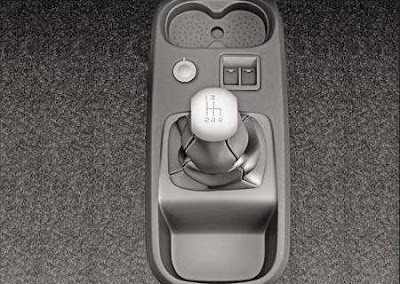
Based on the design styling of the Kia KOUP concept vehicle. Kia Forte Koup's fluid lines and balanced proportions, meant to evoke an emotional driving experience, closely mirror the powerful design cues of the concept vehicle and offer the same aggressive stance with swept-back wrap-around headlamps, aggressive air intakes and a low, sleek profile. Kia Forte Koup exudes attitude with slim, wrapped tail lights, duel exhaust outlets and a rear diffuser. Athleticism and convenience are standard for the Kia Forte Koup EX with body-color bumpers, power heated outside mirrors with integrated turn signals and 16-inch alloy wheels outfitted with P205/55R16 tires. The SX trim offers an even sportier profile with 17-inch alloy wheels paired with P215/45R17-sized premium tires. Smooth and Sporty Ride With a wheelbase of 104.3 inches, an overall length of 176.4 inches, an overall width of 69.5 inches and overall height of 55.1 inches, Kia Forte Koup is slightly shorter in length and height than the Forte sedan, but still boasts comfortable seating for up to five passengers. Koup's lowered stance provides better aerodynamics for those looking for a more exciting ride. The Kia-engineered body achieves high torsional stiffness giving Kia Forte Koup better handling, smoother ride quality and greater refinement than its competitors, with a specially tuned suspension developed to optimize responsive handling on curvy roads. Additional refinements are fitted throughout to help ensure a comfortable ride with good noise, vibration and harshness (NVH) reduction qualities. Built on a front-wheel-drive unibody frame, Kia Forte Koup utilizes the same platform as the sedan, with an independent front suspension with MacPherson struts and stabilizer bar and a torsion beam rear suspension with struts and coil springs. This combination helps provide the optimal balance of handling and comfort. An engine-speed-sensitive, power-assisted rack-and-pinion steering system adds the finishing touch for precise handling to help provide the most advantageous amount of assist for varying road conditions. The SX trim also comes with a sport-tuned suspension providing for a firmer ride with reduced body roll and improved handling. Lively Performance More powerful than the Honda Civic Coupe, Ford Focus Coupe or Chevrolet Cobalt Coupe, Kia Forte Koup EX is driven by a 2.0-liter DOHC four-cylinder engine, producing 156 horsepower and 144 pound-feet of torque that features Continuously Variable Valve Timing (CVVT) and multi-port electronic fuel injection, both of which provide for greater performance and fuel economy. The SX features an upgraded 2.4-liter inline four-cylinder engine, also with CVVT, which delivers 173 horsepower and 168 pound-feet of torque, more than the Scion tC. Expanding upon the dynamic look and feel, Kia Forte Koup's engine hums powerfully courtesy of the dual exhaust outlets outfitted on both EX and SX trims. Like the Forte sedan, two transmission options are available for both 2010 Forte Koup models: a standard five-speed manual transmission or an optional electronically controlled four-speed automatic transmission (EX models). The SX model features a standard six-speed manual transmission and an optional five-speed automatic transmission with Sportmatic�. Kia Forte Koup fuel economy is not sacrificed for sportiness, as both engines deliver at least 31 miles per gallon (highway). The 2.0-liter engine offers 25/34 mpg (city/highway) when mated with either the five-speed manual transmission or the optional four-speed automatic. Those opting for the more powerful 2.4-liter engine also can expect an economical 22/32 mpg with the six-speed manual and 23/31 when paired with the five-speed automatic transmission. Striking Interior With a surprisingly spacious interior for a two-door coupe, Kia Forte Koup provides a comfortable 90.7 cubic feet of interior volume, larger than the 2009 Honda Civic Coupe, Scion tC or Chevrolet Cobalt Coupe. Driver and passengers have an impressive 38.7 inches of headroom and 43.6 inches of legroom in the front seats and 35.3 inches of headroom and 33.9 inches of legroom in the rear seats. Trips to the beach and weekend getaways will be a breeze with ample cargo space of 12.6 cubic feet, enough to accommodate luggage and belongings of all passengers. Kia Forte Koup continues the luxury treatment with a host of standard interior features, beginning with supportive, nicely appointed sport seats outfitted with more aggressive bolsters on the seat cushion and seat back for optimal comfort. Air conditioning, a driver's seat height adjuster, adjustable rear seat headrests, tilt steering column, rear defroster, center console with dual cup holders, map lamps and variable intermittent wipers are also just some of the myriad amenities standard on every vehicle. Also standard on all models are power windows, power door locks with remote keyless entry and cruise control with steering wheel-mounted controls for added convenience. Progressing to the SX trim offers additional standard touches such as: unique sport cloth seats with vibrant red stitching, a tilt and telescoping steering column, leather-wrapped steering wheel and shift knob, metal pedals and metal finish trim and a Supervision� gauge cluster with trip computer further enhancing its energetic personality. Both EX and SX trims also offer an optional power moonroof. An optional Leather Package is available for both EX and SX trims. When combined with the EX trim the Leather Package adds leather seats, leather-wrapped steering wheel and shift knob and heated seats. When paired with the SX trim it includes leather and heated seats in addition to the standard leather-wrapped steering wheel and shift knob. Superior Sound For inside entertainment while cruising down the road, Kia Forte Koup comes with a standard six-speaker AM/FM/CD/MP3 audio system outfitted with SIRIUS Satellite Radio capabilities with three months complimentary service�. For added listening convenience steering wheel-mounted audio controls also come standard on all models, as well as USB and auxiliary input jacks in the center console with full iPod� and MP3 controllability via the audio head unit. Standard Bluetooth� connectivity enables hands-free operation for compatible cell phones. Standard Kia Motors Safety Kia Forte Koup offers a class-leading level of standard safety equipment, with features such as dual front advanced airbags, front seat-mounted and side curtain airbags, four-wheel disc brakes with an antilock brake system (ABS), electronic stability control (ESC) and a tire pressure monitoring system (TPMS).

Toyota Camry

The Toyota Camry has an upgraded standard powertrain for 2010. A new 2.5-liter four-cylinder engine equipped with variable valve timing with intelligence (VVT-i) will produce 169 hp for Toyota Camry, LE and XLE grades. For sporty performance, SE grade get additional tuning and gets 179 horsepower, 21 more horsepower than the previous four-cylinder engine. The new engine can be combined with a six-speed manual transmission or a six-speed automatic transmission with sequential shift. A powerful 3.5-liter V6 delivering 268 horsepower is also available.

The Exterior changes to the gas model Toyota Camry include a newly designed grille and front bumper, an enlarged lower intake, larger projector headlamps and restyled tail lamps. The Toyota Camry and LE grades feature restyled standard wheel covers. The XLE grade will run on new 16-inch 10-spoke alloy wheels, while the SE grade adds new 17-inch sporty alloy wheels.

The Toyota Camry Hybrid exterior enhancements will include a unique hybrid grille, a distinct front bumper, a wider lower intake, restyled fog lights and 16-inch alloy wheels.

The Toyota Camry Hybrid, equipped with Toyota's industry-leading Hybrid Synergy Drive, certified as an Advanced Technology Partial Zero Emissions Vehicle (AT-PZEV) is just one of a handful of cars that meets this strict standard, producing over 70 percent less smog-forming emissions than the average new car.

The Inside,
Toyota Camry and LE grades are available with an optional audio system equipped with a new USB port for auxiliary music sources, Bluetooth�, integrated satellite radio, single-CD, and MP3 and streaming music capability. Previously an option, all Toyota Camry gas models will now be equipped with Vehicle Stability Control with traction control. Auto up/down power windows with jam protection on all four doors is standard equipment. Toyota Camry Hybrid adds a newly designed meter cluster and Fraichir, a combination of silk protein and synthetic fiber, cloth seating surfaces that are gentle to the skin.


Nissan Nuvu Concept

The Nissan Nuvu is a concept vehicle with unique 2+1 seating. It is easy to drive, even easier to park. It is the key solutions for tomorrow's city car."
The Nissan Nuvu is described as a moving oasis, a haven of green tranquillity in the urban jungle. To underline this message, Nissan Nuvu incorporates a witty representation of its green credentials: across its all-glass roof are a dozen or so small solar panels. Shaped like leaves on a branch, the power they generate is fed to the battery using a 'tree trunk' within the car as a conduit. Nissan Nuvu also uses natural, organic and recycled materials within the cabin.

The interior package
The dimensions provide all the interior room needed for the vast majority of city journeys. Nissan Nuvu has two regular seats and a third occasional chair that can be folded down when required. But, unlike some two-seater city cars currently on the market, it is a thoroughly practical proposition with an integral luggage area providing sufficient space for a typical supermarket or shopping expedition.

The packaging is designed to give priority to driver comfort with C-segment levels of space and the flexibility to invite one or two passengers on board. Cabin layout places the regular passenger seat beside but largely behind the driver's seat, allowing the passenger to stretch right out. Ahead of this seat is a third occasional chair which, when not in use, is folded away into the dashboard assembly.
But even when the third seat is in use, there remains sufficient legroom for both passengers.
In the interests of saving both weight and space, the third seat has a centre section made from hardwearing yet comfortable netting. This hammock-like approach also has the benefit of allowing cool or warm air to circulate around the occupant's body for extra comfort.
Shopping bags, briefcases and smaller items of luggage can be stowed behind the driver's seat while if the driver is travelling solo, larger items can be stowed in the passenger footwall.

The Natural materials
Many of the materials used inside Nissan Nuvu reflect an increasing concern for the environment. The floor is made from wood fibres pressed into laminate sheets and is studded with rubber inserts made from recycled tyres for grip.
To create a light and bright interior, the windscreen and roof merge into one extended panel running virtually the entire length of the car. But undoubtedly the most unusual feature of the interior is the 'energy tree' which rises from the luggage compartment floor to the roof behind the driver's seat.

The Solar panels
The energy tree is shaped like a thin trunk. As it reaches daylight it branches out under the glass roof providing occupants with protection from bright sunlight� just like a real tree. And providing a visual reminder of Nissan Nuvu's green credentials, covering the branches are dozens of small solar panels shaped like leaves.
The panels absorb energy from the sun which is then fed back down the energy tree and used to help recharge the battery and provide an extra power boost for the electric motor. As well as being genuinely green energy, it is estimated that the power generated via the solar panels will save the equivalent of one full overnight charge from mains electricity each month.

The driver controls are as simple as possible. All the major functions - steering, braking, transmission and throttle - are 'By-Wire' while the steering is controlled by an aircraft-style steering yoke: with just one turn from lock to lock, the steering is very direct for agility and manoeuvrability in the city. Nuvu's turning circle is just 3.7 metres. Thanks to its wide track and the use of 16 inch 165/55 tyres mounted on lightweight, almost transparent, wheels, ride comfort, stability and agility is of the highest order.
There are two pedals - for stop and go - stalks for minor controls and a digital instrument panel with dials for speed, distance covered and battery range.

Rear view/parking monitor
Two screens on the dashboard display the view behind the car - there are no door mirrors to disturb the airflow, but small cameras - and double as monitors for the Around View Camera which give a bird's eye view of the car when manoeuvering or parking.
Saving energy was the guiding force behind the use of low-energy LED head and tail lamps, while Nissan Nuvu's heating and ventilation system filters and cleans the city air as it passes through the vehicle. Not only does it produce no emissions at source, but Nissan Nuvu actually helps clean up the city environment.

The exterior and interior design
Nuvu's design is further clear evidence of Nissan's continued desire to challenge convention and to explore all the possibilities that the EV could bring us. In many ways it was inspired by our two most extreme EVs of recent times: Mixim and Pivo 2.
Significantly, though, Nuvu delivers a more realistic interpretation of two of the most important aspects of its forerunners - the 'Friendly Innovation' found in Pivo 2 and the 'Sports Dynamics' central to Mixim

Matching the ecological values of an electric vehicle, the moulded plastics and synthetic elements found inside a typical production car have been replaced by natural materials and organic alternatives, such as the wood fibres and rubber from car tyres used for the flooring. The result helps create a relaxed, warm atmosphere within Nuvu's cabin.
During the design development stage, key targets were to develop an EV that encompassed obvious modernity with engaging ambience and a playful aspect - hence the energy tree. "You don't need to be a car lover to fall in love with Nuvu," adds Bancon.

EV drivetrain
Nissan Nuvu is more than a styling concept of a future EV. It is a fully working mobile test bed for much of the technology that will be used in Nissan's production EV to be launched in 2010. For this reason elements of its technical specification are being kept secret for the time being.
The electric motor used in Nissan Nuvu is mounted at the rear of the vehicle and drives the back wheels, though neither its exact specification nor the power and torque figures are being released at this stage. A driving range of 125 kms and top speed of 120 km/h are being made public, however.

Li-Ion battery
Similarly although it can be revealed that the batteries used are of the latest laminated lithium-ion type and have a capacity of 140 Wh/kg (watt-hours per kilogram), the total capacity of the batteries and number of modules are not being disclosed at this stage.

Unlike a conventional lithium-ion battery with its bulky cylindrical cells, the laminated Li-Ion battery as used in Nissan Nuvu has thin laminated cells and fewer components overall. This boosts its power by a factor of 1.5 at the same time as halving its physical size. It also remains twice as efficient as a conventional cylindrical Li-Ion battery even after five years or 100,000 kms of continuous usage.
Its compact size allows the batteries to be mounted under the seats and the vehicle's flat floor, thus helping to keep the centre of gravity as low as possible.
A quick charge from empty to full should take between 10 to 20 minutes while a full charge should take between three to four hours from a domestic 220V socket.


Inside nano car | Intip Daleman nya


tata nano car mobil termurah abad ini


The car start to sell Public in 9 april 2009. let see inside the car.First, what should I call the car? It�s not a hatchback since there is no door to open at the rear end. It should be called a �Nano�, a new term for this segment. And because of no rear door, the luggage in the boot can only be accessed from the rear seat. When I got into the car, my first impression was the space inside the car, much more than its closes rival, M 800. The head room too is quite good and in fact is more than Santro xing, the tallest small car. Since there is no engine in front, the leg room was pretty good for the front passenger. The dashboard console was at the center and has a Speedometer, an odometer besides turn indicators and a few Engine lights.

i-MiEV Terganjal Harga


i-MiEV is The Sounds of Silence. it is MIEV (Mitsubishi In-wheel motor Electric Vehicle) or MiEV (Mitsubishi innovative Electric Vehicle)Listen carefully and you might hear the slight whir of its motor, the hint of wind noise and a faint thrum from the tires. Think whisper; that's how quiet this minicar is.
Could this be the sound of future driving? If Mitsubishi has its way, then this Mitsubishi i MIEV � a test bed for an electric vehicle scheduled to be introduced for 2010 � makes a pretty strong case for it. This particular car is one of a 30-vehicle test fleet that's running around Tokyo right now.
At Mitsubishi's first driving demonstration of its i MIEV (Mitsubishi Innovative Electric Vehicle) prototype, we jumped behind the wheel to check out the sounds of silence. Mitsubishi Motors Corp. started production already i MiEV electric car in the next year, and planned to go to Europe and the U.S. market in 2010.
However, whether this environment-friendly cars will also go to the Indonesian market. It seems impossible if the car is environment-friendly can go to the market conditions in the middle of a global economic crisis at this time.
In this case the Director of Marketing KTB lift speech. "Being that our constraints hybrid car or low emission can go to the market of the country," said Marketing Director of KTB Rizwan Alamsyah detikOto when contacted on Saturday (11/4/09).
According to him, in the course price Jepangnya perunit i-MiEV is expensive and even 2 times normal price car, so it is difficult to determine when the cost of the car to enter Indonesia.
However, Riswan be sure if the car can the government subsidy from the KTB can consider the value of the mitsubishi i-MiEV to when in Indonesia, the Indonesian society itself will be moved from vehicle to vehicle beremisi friendly environment.
"One of them revealed the price miEV i-entry by the government, the community can move on to greener cars" said Riswan.
Meanwhile, Indonesia persistence Mitsubishi i-MiEV incorporate the reasons are very environmentally friendly terbukti sure if there is a reserve unit of the vehicle, ready to attend KTB.
"We are ready if there is a message unit i-MiEV," he said.
However, it seems impossible because of the many considerations. "Although there is, it is not possible. What about the needs sparepart they need," he said.
"Once again, it is not possible. We still have to front," specifically.