Showing posts with label 2007. Show all posts

Daihatsu Terios, 2007


 Daihatsu Terios, 2007


Designed to appeal to young families and older people seeking the traditional 4x4 qualities of visibility, bad-weather traction and versatility, the Daihatsu Terios also offers small car running costs and manoeuvrability.

Its turning circle is a tight 9.8 metres (kerb-to-kerb) for the S and SE and a still hatchback-like 10 metres for the bigger-tyred SX, while the SX body length is between that of the new Renault Clio and larger Megane.


Compared to the previous model, the Daihatsu Terios 1.5 SX is 230 mm longer at 4,075 mm and a significant 190 mm wider at 1,745 mm. It is 45 mm higher but purely because of its standard roof rails. The entry-level 'S' model - which lacks roof rails - is actually 5 mm lower than before.


Greatly boosting the new Terios's tough, stable stance are front and rear tracks measuring 1,450 and 1,480 mm respectively - a massive 145 and 170 mm greater than before. Meanwhile, the wheelbase - at 2,580 mm - grows by 180 mm.

Complementing this are especially large 16 ins wheels for all models with either 215/65R tyres for the entry-level Terios 1.5 S manual and higher-spec SE automatic or beefy 235/60R tyres for the manual SX.


Versatile Interior

The versatile interior offers mid-sized hatchback passenger space with a clever split fold-and-tumble rear seat which liberates a 1,290 mm maximum floor length - long enough to take a mountain bike.

Even with the rear seat in use the 380 litre capacity boot is capable of taking four 45" golf bags, four vertically-stacked mid-sized suitcases or a typical baby buggy. Most models also have load-floor securing hooks.


Sprightly, Efficient Powertrain


Based on the Sirion's 1.3 litre DOHC 16-valve petrol engine, the Daihatsu Terios has a larger 1.5 litre capacity, producing 105 PS at 6,000 rpm and a flexible 103 lb. ft of torque at 4,400 rpm.

Its standard Dynamic Variable Valve Timing (DVVT) enhances low-speed pulling power and high rev throttle response by maximising combustion efficiency. It also boosts fuel economy and lowers exhaust emissions.


The new Terios's engine - with the same 72 mm bore as the 1.3 litre but a longer 91.8 mm stroke - is both lively and flexible, requiring fewer gear-changes to make sprightly progress.

For example, its torque curve is virtually flat between 3,200 and 4,000 rpm - the most frequently used rev-range in normal driving.


Top speed for manual models is almost 100 mph and over 93 mph for the automatic, while the Daihatsu Terios 1.5 S manual records 40.4 mpg on the Extra Urban Cycle and the Terios 1.5 SE automatic not far behind at 39.8 mpg.

The new Terios 1.5 S manual has a low CO2 reading of 186 g/km with the Terios 1.5 SE automatic recording 196 g/km.


In fact, the Daihatsu Terios 1.5 S has the best CO2 reading of any four-door 4x4 - diesel included - and comfortably beats rivals such as the Suzuki Grand Vitara, Mitsubishi Shogun Pinin and Honda HR-V.

The short-throw five-speed manual gearchange is light and slick, while the four-speed automatic is both quick-reacting yet capable of selecting a higher gear during more gentle driving, aiding fuel economy and refinement.


Meanwhile, all new Terios models have a full-time 4WD system with a fixed 50/50 front to rear torque-split and centre differential which eliminates axle wind-up - the phenomenon of the steering becoming increasingly heavy on full-lock.


Because of this 50/50 torque split, high-speed stability and slippery surface traction is greatly enhanced compared to most rivals. These models are usually rear-wheel drive with selectable 4WD or effectively front wheel-drive, only calling on 4WD when sensors detect wheelspin.


A fascia-mounted switch activates the electronically-controlled differential-lock. This further aids traction in mud or deep snow, while short front and rear overhangs and a 190 mm ground clearance also signal serious off-road ability. The new Daihatsu Terios has a front approach angle of 38 degrees with a rear of 37 degrees.

The compact engine is mounted in-line, followed by the gearbox. A centre differential transfers torque to both the front and rear axles via two separate propeller shafts.


Sporty Handling From New Chassis

The new Daihatsu Terios benefits from a totally new monocoque platform with a revised chassis tuned for car-like, confidence-inspiring handling with vastly improved ride and stability compared to the previous model.


Aided by its considerably wider front and rear tracks, the new Terios features front MacPherson struts, lower wishbones and an anti-roll bar.

The five-link rear suspension has variable-rate coil springs and near vertical rear shock-absorbers which improve damping and therefore comfort, pitch and roll.

Compared to the old Terios, the front anti-roll bar is of a new design, the revised hydraulic power-assisted rack-and-pinion steering gear achieves excellent accuracy and feel, while the bump stops better control axle articulation.


In addition, an increased shock-absorber rebound stroke improves rough terrain driveability.

At the rear, a new lateral rod reduces axle squirm and benefits refinement, a newly-designed upper control arm enhances stability, a new shock-absorber reduces brake judder and a longer suspension stroke improves ride comfort.

Other rear suspension improvements include a more compact design resulting in a lower boot floor and a new design of spring and lower control arm which reduce rear differential noise.


Outstanding Safety Measures

The Daihatsu Terios has outstanding safety measures with in-house tests giving results equal to a Euro NCAP 4-Star occupant protection and 3-Star pedestrian protection.


Crushable structures are used at the front and rear of the body with the cabin itself made stronger to minimise occupant injury. To protect from side-impacts, the front floor cross-member, tunnel, sills, B-posts and roof-side rails are all strengthened to secure occupant survival space.

As for pedestrians, the front bumper and bonnet are designed to minimise injury to the head and thigh with a shock-absorbing structure built into the bonnet.


High-power seatbelt pretensioners are standard while special pads are installed to reduce injury to occupant knees, torso and lower legs. The pedals are also designed not to intrude during an impact.

Both driver, passenger and side airbags are fitted and the standard four-channel anti-lock brakes (ABS) also feature electronic brakeforce distribution (EBD) which maximises stopping power and minimises skidding.


Outstanding Equipment

Every new Terios model has an outstanding equipment tally with the entry-level Terios 1.5 S featuring air-conditioning, power-steering, ABS with EBD, full-time four-wheel drive with centre diff-lock, driver, passenger and side airbags, three rear-seat three-point seatbelts, radio/CD player, four electric windows and reverse parking sensors.


Expected to be the best-seller, the Daihatsu Terios 1.5 SX adds, for example, alloy wheels with 235/60R tyres, two-tone wheelarch extensions and side-skirts, roof rails, multi-information display, front fog-lamps, smoked 'privacy glass' for the rear side doors and rear window, leather steering wheel, electric windscreen de-icer and door mirrors and various AC sockets and load-restraint ties.

The automatic transmission-only Terios 1.5 SE has a similar equipment level to the SX but features a different design of alloy wheel with 215/65 tyres and has colour-keyed side skirts.

Daihatsu Sirion, 2007


Daihatsu Sirion, 2007


The new Daihatsu Sirion is a totally differently proportioned car to its predecessor and more closely matches the Nissan Micra for length, width and height but with passenger space rivalling the considerably longer Honda Jazz.

For example its front and rear tracks - at 1,460 and 1,465 mm - are 65 and 60 mm wider than before. The Sirion's length of 3,600 mm is actually 95 mm shorter and even 20 mm less than the Ford Ka.


However, the wheelbase of 2,430 mm is 85 mm longer than the old model and the 1,665 mm width is 70 mm more and even 5 mm greater than the Toyota Yaris, Nissan Micra and Fiat Punto. Height grows by 100 mm to 1,550 mm - 10 mm greater than the Micra.

Especially short front and rear overhangs, a higher seating position and a gently tapering roofline provide surprising space yet cleverly mask the height.


The car looks especially wide and squat - helped by the strong swage lines over the wheelarches flowing into a protruding rear bumper. The overall effect is of a confident, well-balanced design exuding quality and solidity.

An especially impressive drag coefficient of 0.31 Cd confirms the new Daihatsu Sirion's efficiency and aids fuel economy and top speed while reducing wind noise.

As Yoshihiro Fujibayashi, Studio Leader, Styling Division, Daihatsu Motor Co, Ltd said: "We tried to give the car sculpture-like dimensions and a sense of quality. Look at the handsome, chiselled face around the headlamps, the animated and dynamic side view and the rear combination lamps integrated into the bodylines.


Impressive Interior Space


The new Daihatsu Sirion has occupant legroom and headroom from the next-size-up. Its interior width of 1,400 mm is 70 mm greater than before and 10 mm more than the Toyota Yaris.

A 590 mm seat height allows easy entry and exit aided by wide-opening doors. The rear doors, for example, open to 80 degrees.

The interior length of 1,830 mm is 20 mm more than the Yaris while the interior height is also greater than the Toyota.


Luggage space is also impressive. With both rear seats up it measures 225 litres (VDA) compared to 205 litres for the Yaris. However, with the seats folded, this rises to 630 litres - 80 litres more than the Toyota.

Mr Fujibayashi continues: "As for the interior, we tried to make this as simple as possible. The speedometer is on the steering column. We designed this after the image of a clock placed on a coffee table in a living room.


World-Class Engines


The new Daihatsu Sirion boasts two of the world's most efficient 1.0 and 1.3 litre petrol engines, combining strong driveability with ultra-low fuel consumption and exhaust emissions.

Both offer punchy throttle response at town speeds, reducing the need for constant gear-changes, yet are especially sweet-spinning on the motorway, allowing the keener owner to exploit their eagerness to rev during brisker driving. Both are also Euro4-compliant.


All-New One Litre

The three cylinder, twin-overhead camshaft 1.0 litre is all-new and is bigger than before with a 998 cc capacity (was 989 cc), and a slightly smaller 71 mm bore and longer 84 mm stroke (was 72 x 81 mm).

This gives greater low-speed torque or pulling power, while the Dynamic Variable Valve Timing (DVVT) allows a wider spread of high-end power and low-speed flexibility.

The new 12-valve 1.0 litre's maximum power of 69.3 PS at 6,000 rpm is exceptionally high for its size, while the 69.3 lb.ft torque is also impressive - especially at an accessible 3,600 rpm. The compression ratio is 10.5:1.


Featuring compact combustion chambers and an offset crankshaft, this engine employs resin-coated pistons and low-tension piston rings for reduced internal friction.

Both head, block and even oil-pan are made from lightweight but rigid aluminium, contributing to low vibration and quietness.


Unrivalled Performance, Economy And Emissions

No rival can match the new Daihatsu Sirion 1.0 litre's performance, fuel economy and low emissions.

The top speed is a remarkable 99.4 mph with a 0-60 mph time of 13.5 seconds. Fuel consumption is an outstanding 46.3/64.2 and 56.5 mpg on the Urban/Extra Urban and Combined Cycles.

An exceptionally low CO2 emissions of 118 g/km means the car qualifies for a Road Fund Licence charge of only �75 for 12 months plus �38 first registration fee (AA band up to 120 g/km). This places it in a category largely dominated by hybrids - and the smaller Daihatsu Charade, of course.


Thoroughly Revised 1.3 Litre


The new Sirion's four-cylinder 1.3 litre engine has been thoroughly revised to provide stronger low-speed torque and a more useable power delivery in day-to-day driving.

Still featuring Dynamic Variable Valve Timing (DVVT) and twin overhead camshafts, this basic engine is also supplied to Toyota by Daihatsu for use in its Yaris supermini.


In the new Sirion's application, power is 87 PS (was 102 PS) but at 6,000 rpm instead of 7,000 rpm. Torque is the same 88.5 lb.ft but at a much more useable 3,200 rpm instead of 4,400 rpm as in the previous model.

With a compression ratio of 10.3:1, this compact, light, all-alloy engine has bore and stroke dimensions of 72 x 79.7 mm and - like the 1.0 litre - employs durable chains for its camshaft drive.


Top speed for the manual is 106 mph with the four-speed automatic only slightly slower at 102 mph. The former has a 10.9 second 0-60 mph time while the automatic takes 12.6 seconds.

Fuel economy is outstanding for both at 37.7/58.9 and 48.7 mpg on the Urban/Extra Urban and Combined Cycles for the manual and 32.8/54.3 and 44.1 mpg for the automatic. CO2 emissions are among the lowest in the Daihatsu Sirion's class at 137 and 151 g/km respectively.


World's First Self-Regenerating Catalyst


The new Daihatsu Sirion 1.3 litre features the world's first self-regenerating catalyst. This effectively extends the life of the catalytic converter, reducing maintenance costs.


It also is kinder to the environment as it keeps the catalyst 'healthier' over a higher mileage meaning the already low 137 g/km CO2 emissions do not increase as the engine becomes older.

This revolutionary technology works by providing a self-regenerating capability in the particles of the precious metal which normally degrades.


Using nanotechnology, the intelligent catalyst incorporates metallic ions of palladium, the most heat-sensitive of the metals used in a catalytic converter.

According to temperature and available oxygen, the particles turn in and out of a crystalline state therefore regenerating and prolonging the 'cat's' ability to clean exhaust gasses.


European-Tuned Chassis

The new Sirion's suspension has been thoroughly proven on a variety of European roads and tuned for suppleness and stability.

The front employs MacPherson struts and coil springs while the rear uses the equally popular and well-proven semi-independent torsion bar system with separate coil springs. With almost vertically-mounted shock-absorbers, this reduces the transmission of road noise and makes the damping more effective.


Unusually for a small car, anti-roll bars are fitted to both the front and rear suspension, while the front suspension stroke is especially long to improve ride comfort. The front also uses ball-joints for its anti-roll bar which also enhances ride and handling.

Special features at the rear include a lengthened suspension stroke and more rigid bearings to improve stability.


To optimise fuel economy the new Daihatsu Sirion uses an electric motor for its standard power steering. This is more efficient than the conventional power-sapping hydraulic system.

However, many electric power steering set-ups are criticised for their lack of feel so Daihatsu's chassis engineers have ensured the new Sirion avoids this failing.


The result of their meticulous fine-tuning is a chassis which is absorbent, well-damped and provides reassuringly progressive body roll during brisk cornering.

Straight-line stability is especially strong and the steering self-centres well, avoiding the vagueness and lane-wander of some electric systems.


Class-Beating Turning Circle


Despite having one of the widest tracks and bodies in its sector, the new Daihatsu Sirion boasts a class-beating turning circle.

Coupled with excellent visibility and a seating position higher than the norm, parking is made that much easier - aided by rear parking sensors on SE models.


In fact, with a kerb-to-kerb turning circle of 9.4 metres, the Daihatsu Sirion is 0.4 metres tighter than the Ford Fiesta or Toyota Yaris, 0.6 metres better than the Vauxhall Corsa and a massive 0.9 metres more agile than the Renault Clio.


Top Level Safety Package

Every aspect of safety has been studied for the new Sirion with the aim of achieving 4-stars in the Euro NCAP tests.

The body was subjected to the world's most rigorous crash tests including full-on frontal and side-impact collision tests at 55 km/h, a rear impact at 50 km/h and a frontal offset collision test at 64 km/h.


In addition, the new Daihatsu Sirion was deliberately crashed against much larger cars to ensure its compatibility in 'real-life' accidents.

All main frame members are straight, joint rigidity is optimised and suspension mounts reinforced. High-tensile steel is used where needed and bonnet and bumpers are designed to lessen injury to pedestrians.


The door pillars and roof sides have special ribs which reduce possible head injury while both the brake pedal and steering wheel have been designed to avoid intruding during a frontal impact.

Standard on all models are driver, passenger and - unusually at this price - side airbags, while the front seatbelts have pretensioners and force-limiters.


The three rear seatbelts all boast three-point location plus ISOFIX for the outer belts. This gives better location for child safety seats. There are a total of five height-adjustable head-restraints.

The new Sirion's anti-lock ventilated front disc and rear drum brakes (ABS) are aided by Electronic Brakeforce Distribution (EBD). This optimises braking force according to the weight distribution of passengers and luggage.


Unbeatable Equipment Levels

There is no such thing as a 'basic' entry-level Daihatsu Sirion despite prices starting at �6,995 OTR. Every model has unbeatable equipment levels.

For example, standard for all - including the Sirion 1.0 S - is air-conditioning, a radio/CD player, ABS with EBD, power steering, four electric windows, front and side airbags and remote central-locking.


The Daihatsu Sirion 1.3 S adds, for example, rear speakers, electric door mirrors, driver's seat height adjustment, chrome interior door handles and a front passenger seat back pocket.

Extra equipment for the Sirion 1.0 SE includes alloy wheels and rear parking sensors while the Daihatsu Sirion 1.3 SE adds a pod-like rev-counter, colour-keyed exterior door handles and black window surround.


Like all Daihatsus, the new Sirion offers customers the reassurance of a three year unlimited mileage warranty with roadside assistance plus an eight year anti-perforation warranty - two years longer than before.

The Daihatsu Sirion also boasts highly competitive insurance groups of 4D for the 1.0 S, 5D for the 1.0 SE and 6D for the 1.3 - both helping reduce running costs.

ABT Audi TT-R, 2007

ABT Audi TT-R, 2007


The Abt TT-R
The real racer from the exclusive Kempten-based tuning company bears the letter "R" in its name - of course the powerful version of the TT performing incredible 355 HP (262 kW) does, too. In a flash, namely 5.1 seconds, the sportscar reaches the 100 km/h threshold.

The cockpit of the TT-R has a lot to offer its ambitious driver.
With its dynamical design it harmonizes perfectly with the sporty vehicle character - steering wheel, gear shift knob and centre console are kept in exclusive carbon-leather optics.
The magical three letters that convert a beautiful Coup� into a race car can also be found in the car interior again, as everybody driving a TT-R cannot get enough of this exclusive model.

Lobini H1, 2007

Lobini H1, 2007


Lobini, which was recently bought by Brax Automobile, has presented the new 2007 Lobini H1 at the "Sal�o do Autom�vel 2006". The car has a removable hard-top roof, redesigned front with new headlights and an aerodynamic kit which makes it a very appealing sports car. On the inside the Lobini H1 comes with leather seats available in light gray, dark gray or black.

History
In 1999 Lobini project was created. It aimed at developing the best Brazilian sports car with a technology to be compared with the international vehicles of the same category. Lobini H1 is now history. It was a success in "Sal�o do Autom�vel 2002" and it can be seen on the streets of many cities in Brazil.

The company has recently shipped one of its cars to England, and it has been working with Lotus for the technical validation of Lobini in Europe.

Engine
* VW 1.8 I Turbo with inter cooler, 4 cylinder, 20 valves and 180 hp
* Transversal rear between axis
* Electronic injection Bosh
* Unique sport stainless steel exhaust pipe

Transmission
* Five gear - mechanical transmission

Suspension
* Independent suspension in the four wheels with carbon steel triangle arm
* Hydraulic shock absorbers JRZ for competition, with Eibach coils and adjustable
* Disc brakes in the four wheels with forced ventilation system

Chassis
* Carbon steel Tubular structure with anti - corrosive treatment

Bodywork
* Plastic reinforced with fiber glass

Specifications
* Dimensions: length = 3720mm, width=1800mm, height = 1180mm
* Height from the ground: 150mm
* Between axis: 2400mm
* Fuel tank: 58 liters
* Weight: 1030kg
* Weight distribution: 41/59
* Acceleration: 0 to 100km/h in less than 6 seconds
* Wheels and tires: 17" x 7", Front: 205 45 R17 Pzero asymmetric, Rear: 225 45 R17 Pzero asymmetric

Steering wheel
* Hydraulic steering wheel - height and depth adjustable, with integrated panel

Series items
* Air conditioning
* Electric windows
* Engine start button on the panel
* Luggage compartment behind the seats
* Sound system with CD player
* Adjustable competition seats

Honda Small Hybrid Sports Concept, 2007

Honda Small Hybrid Sports Concept, 2007


Honda Small Hybrid Sports Concept, a design study model, demonstrates a unique fusion of advanced environmental technology, exciting styling and fun-to-drive characteristics.
The Small Hybrid Sports Concept is conceived around a front-wheel drive, small car platform and is powered by a Honda IMA 4-cylinder petrol/electric hybrid system driving through a CVT transmission. It explores the idea that a car can have a low environmental impact yet still deliver all the driving enjoyment expected of a compact sports car.

The aerodynamic design is characterised by curvaceous and contoured surfaces contrasting with sharp "folded" edges. The short front and rear overhangs, together with wheelarches that wrap tightly around large wheels, further enhance the dramatic looks of this sports coupe. An accentuated, arrow-like nose features a full width air intake with Civic family overtones. This sweeps forward into a distinct protruding centre section complete with 'H' logo.

The Concept model's fluid lines are created by a steeply raked windscreen which extends back above the occupants' heads where it meets a one piece glass roof. This in turn flows rearwards to give the car its fastback styling, terminating in a distinctive and futuristic 3D floating glass design - a concave element which forms an additional vertical window. Further distinction is provided by a 'floating' LED tail light unit that stretches across the full width of the car. At its centre, the glass panel extends downwards and contains an illuminated 'Small Hybrid Sports' name plate.

The Hybrid Sports Concept is equipped with 165/60 section tyres mounted on 20-inch distinctive rims. Their dimension supports low rolling resistance without compromising sporty driving.
Compact external dimensions lend themselves to nimble, agile performance on the road and help to ensure a good power to weight ratio. 4000 mm in length, 1270 mm tall and 1760 mm wide, and the 2350 mm wheelbase, in conjunction with a sports suspension, delivers stable and predictable handling characteristics.
The body is particularly aerodynamically efficient and compact. Rear-facing digital cameras take the place of conventional door mirrors.

Honda S2000 CR Concept, 2007

Honda S2000 CR Concept, 2007


The lighter, stiffer and more aggressive overall design is engineered to maximize the S2000's potential on a racetrack with the goal of substantially-improving track times, chassis balance and feel. The factory-tuned roadster provides highly-aggressive suspension settings, increased body and chassis rigidity, overall weight reduction and an aerodynamic body kit dialed-in for reduced lift. An aluminum hardtop replaces the convertible soft top as standard equipment.

The full-body aerodynamic package reduces lift through large and highly-tuned front and rear spoilers.
Substantial structural bracing has been added to the storage area previously occupied by the soft top, resulting in additional rigidity. The aluminum hard top replaces the soft top of the conventional S2000, resulting in an overall weight savings of approximately 90 pounds when removed (relative to the current S2000).

The exclusive interior is highlighted by unique cloth seating surfaces with yellow stitching, a unique spherical aluminum shifter and carbon fiber-style trim panels. Air conditioning and an AM/FM Stereo with CD player are optional equipment. Standard features for the S2000 include 17-inch aluminum alloy wheels, ABS and Vehicle Stability Assist (VSA). While VSA serves to effectively enhance driver control during acceleration, braking, and cornering, the system can be disabled with the touch of a button when conditions warrant it.

Widely considered the quintessential roadster-style sports car, the S2000 is the performance icon for the Honda brand and combines uncompromising racetrack-ready performance with everyday usability. The S2000 rewards driving enthusiasts with a potent 2.2-liter, 16-valve DOHC VTEC 4-cylinder engine and a precise, short throw 6-speed manual transmission, along with tenacious handling and a perfect 50/50 weight balance.

The renowned high-revving engine delivers 237 horsepower at 7,800 rpm and 162 lb-ft. of torque at 6,800 rpm. Perfectly complimenting the engine's output characteristics is a compact, longitudinally-mounted, close-ratio 6-speed manual transmission that features a direct linkage for precise shifting and quick throws. Combined with a front and rear double wishbone suspension, precise electric power steering, and a torque-sensing limited slip differential, the end result is a complete, no compromise, performance package for the enthusiast driver.

Acura Advanced Sports Car Concept, 2007

Acura Advanced Sports Car Concept, 2007


Created to take exotic sports car styling to a new level, the concept is designed to incorporate a powerful front-mounted, V-10 engine and a new high-performance, rear-wheel-drive based version of Acura's exclusive Super Handling All-Wheel Drive.

The concept's exterior demonstrates a dynamic fusion of advanced technology and emotion. The long, pronounced hood features deeply sculpted lines and embossed air vents, both of which hint at the powerful engine beneath. The exterior lines run the length of the body, creating a ribbon-like effect from the front headlights to the rear wheel arches, evoking a feeling of movement and power.

Though modern in its appearance, the Advanced Sports Car Concept retains the subtle cues associated with its predecessor, the NSX. The concept's slim, LED headlights are pushed wide and designed to mimic the pop-up headlights found on the first generation NSX. Other styling hints include a modern take on wraparound rear taillights and the all black cockpit.

Wide and low to the ground with a 108.8 inch wheelbase, the concept is anchored by grippy 19 inch front and 20 inch rear performance tires which are mounted to custom billet-machined, polished aluminum wheels. Powerful, ventilated carbon ceramic brake discs and eight-piston calipers accent the wheels. Bold wheel arches and flares add to the concept's aggressive appearance.

The low slung cabin is constructed entirely of tinted glass and sits flush against the body. Door handles are also flush mounted, allowing the sports car to retain a clean and aerodynamic appearance. The Advanced Sports Car Concept features a carbon fiber underbody and the rear is finished with aggressive quad exhaust pipes and integrated rear diffusers, further communicating its high performance potential.

Citroen C4 Picasso, 2007

Citroen C4 Picasso, 2007


The 5 seat C4 Picasso slips naturally into Citro�n's compact MPV range between the established, best-selling Xsara Picasso and the award-winning seven seat version, which will now be known as the Grand C4 Picasso. With three compact MPVs and the full-size C8 people carrier, Citro�n now boasts the broadest MPV range in its history.

The new 5 seat C4 Picasso benefits from the same forward thinking that shaped the design of the recently launched Grand C4 Picasso, with outstanding all-round visibility, a light and airy interior, leading cabin and boot space, incorporating a new version of Citro�n's Modubox folding trolley, and the use of high quality materials. The easy-to-use and flexible interior lay-out combines with the uncluttered interior space and the highest levels of comfort to ensure that travelling is a pleasurable experience.

The interior of Citro�n's newcomer is refreshingly light, with outstanding visibility provided by the huge windscreen, slim pillars and optional panoramic sunroof. Artificial lighting also plays a major role with the availability of various useful features, such as automatic welcome lights under the door mirrors, a portable torch in the boot and reading lights on the back of the front seats, all designed to make journeys easier.

The exterior dimensions (4.47m long, 1.83m wide and 1.66m tall) give the C4 Picasso an extremely spacious interior. This feeling of space is enjoyed by all passengers, with those in the front benefiting from the simple, uncluttered design of the dash, and those in the back from three individual, full-size seats and a flat floor. The innovative seating design, first seen in the Grand C4 Picasso, allows the rear seats to be quickly and easily folded flat into the floor.

When all 5 seats are in use, the new model leads the class with 500 litres of boot space underneath the luggage cover, extending to a maximum 1,734 litres once the rear seats are folded down. Helping to keep the boot tidy, the five seat C4 Picasso can also be equipped with a new version of Citro�n's renowned Modubox. This innovative, removable trolley makes it easy to divide boot space and to transport objects outside of the vehicle.

The new 5 seat C4 Picasso provides a relaxing journey for all occupants. Suspension comfort can be further enhanced by the optional pneumatic rear suspension, while laminated acoustic side windows can be specified to make it even quieter inside. An automatic electronic parking brake and Hill Start Assist are fitted as standard and make everyday driving easier.

Thoughtful extras such as individual air flow controls for back seat passengers, an air quality sensor and a scented air freshener can all add to the pleasant on board atmosphere. A high quality stereo system and folding video screens in the back of the front seats are also available to keep passengers entertained.

Which scored five stars in Euro NCAP tests, the new C4 Picasso meets the most stringent criteria for occupant protection, offering the likes of four Isofix seats, audible seat belt warnings for all seats and seven airbags as standard.

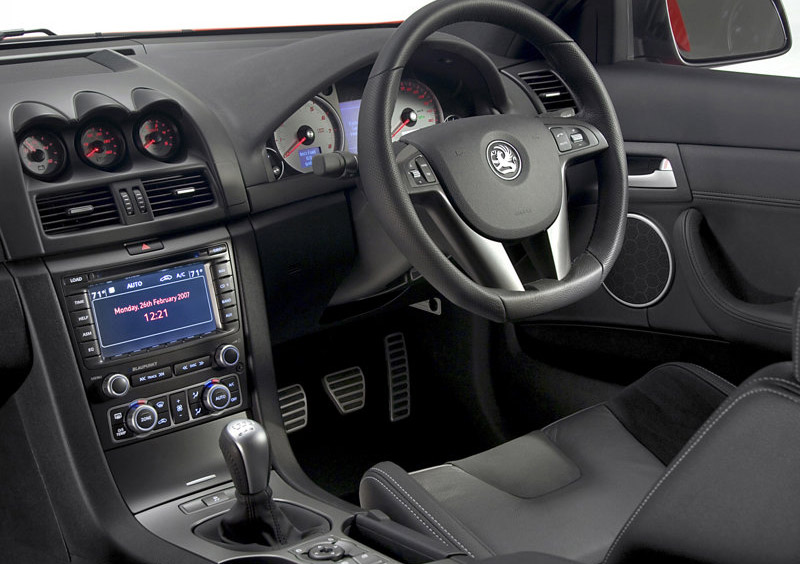
Vauxhall VXR8, 2007

Vauxhall VXR8, 2007


Motoring enthusiasts across Britain mourned the passing of the Monaro. The only Australian-built car to be sold in the UK offered raw and exciting performance thanks to its 6.0-litre V8 and rear-wheel drive set up.

But the thunder from down under hasn't stopped yet - in fact it's only going to get louder. Vauxhall has announced the arrival of a new Aussie musclecar - the VXR8 - and it's more powerful and exciting than even the legendary Monaro.

The dramatic-looking new saloon is powered by the same 6.0-litre V8 as the outgoing Monaro VXR, but revisions to the engine have made it even more efficient. It now develops a massive 420PS and 550Nm of torque, giving it enough grunt to sprint from 0-60mph in just 4.9 seconds. No other supercar offers this sort of power for anywhere near the VXR8's price.

Yet the VXR8, based on Australia's Holden HSV Clubsport R8, offers more in the way of practicality than the outgoing Monaro, with four doors and space for all the family.

Though practical, with a spacious boot, comfortable, long-legged cruising ability and luxuries such as climate control and leather trim, the VXR8 is certainly no softie. Driver aids such as the stability system and traction control can be turned off at the flick of a switch - perfect for drivers who want to hone their skills on a track day!

VXR8 goes as well as it stops, too, with powerful 365mm front disc brakes that slow the car down from 60mph to a standstill faster than a Lamborghini Murcielago or BMW M5.

In response to customer demand, the VXR8 will also be the first VXR model to be offered with an automatic gearbox. In order to maintain the control which VXR buyers require, the optional �1,400 self-shifter has a manual override and a sport setting which ensure the performance isn't blunted - in fact the auto is only half a second slower to 60mph than the manual!

Satellite navigation and 20-inch wheels will be offered as options for those who want to make their VXR8 look more distinctive and help find their way to the best driving roads. Even with all the option boxes ticked however, the VXR8 is still around half the price of other cars with comparable performance.

Vauxhall Corsa 5-door, 2007

Vauxhall Corsa 5-door, 2007


Vauxhall Corsa 5-door, 2007

The new version of the Gamma platform has been codeveloped by Fiat and Opel. It will be used by the 2006 Fiat Grande Punto (a stretched version of the Fiat Punto), 2007 Opel Corsa and future versions of Lancia Ypsilon and Fiat Idea. GM Daewoo will take responsibility for future development of the Gamma platform, so the production of the future Corsa might be outsourced to South Korea as well.
The first official pictures of the 2007 Corsa were released by Opel in May 2006. Based on the photos of the Corsa, it is very likely that the 3-door and 5-door versions will remain. This car will also be sold as a Vauxhall in the UK.

Vauxhall Corsa 3-door, 2007

Vauxhall Corsa 3-door, 2007


A new version of the Gamma platform has been codeveloped by Fiat and Opel. It will be used by the 2006 Fiat Grande Punto (a stretched version of the Fiat Punto), 2007 Opel Corsa and future versions of Lancia Ypsilon and Fiat Idea.
GM Daewoo will take responsibility for future development of the Gamma platform, so the production of the future Corsa might be outsourced to South Korea as well. The first official pictures of the 2007 Corsa were released by Opel in May 2006. Based on the photos of the Corsa, it is very likely that the 3-door and 5-door versions will remain.
This car will also be sold as a Vauxhall in the UK.

Vauxhall Antara, 2007

Vauxhall Antara, 2007


The Opel Antara is a mid-size crossover SUV, which is based on General Motors' Theta platform. It is closely related to the Chevrolet Captiva (made in Korea by GM Daewoo, also sold as the Daewoo Winstorm), and shares the engine lineup with it, but has a different exterior and interior, as well as different exterior dimensions. The Antara is scheduled to be launched towards the end of 2006. In the UK, the model will be sold as Vauxhall Antara.

Engines
* 2.0 L turbodiesel I4, 150 hp (112 kW) (developed with VM Motori) - 5-speed manual
* 2.4 L Ecotec I4, 142 hp (106 kW) (from Holden) - 5-speed manual
* 3.2 L Alloytec V6, 225 hp (168 kW) (from Holden) - ActiveSelect automatic