Showing posts with label volvo. Show all posts

2011 volvo S60 pictures


The all-new S60 will be one of the strongest players in a segment where the competition is razor-sharp,� says Volvo Cars President and CEO Stephen Odell.
The coupe-inspired lines that gave the original S60 its characteristic stance are even more pronounced in the next generation.


The sporty design gives visual promise of an enthusiastic drive and I can assure you here and now that the all-new S60 will live up to that promise. The driving properties are better than in any previous Volvo. The car�s technology will help you to be a better and safer driver,� says Stephen Odell.


The Volvo S60 Concept is being shown for the very first time at the Detroit Motor Show in early January 2009. The production version of the all-new Volvo S60 will be introduced in 2010.
DNA at a new level
The concept car gives a clear indication that the Volvo Cars design team is stepping up to the next level in the development of the products� DNA.


The modern Scandinavian design of the S60 Concept reflects the �Do Not Abandon� approach to the strengths of the brand�s design language. At the same time, it�s a Dramatic New Approach. A refined balance of tradition and new, dynamic visual excitement,� says Volvo Cars� design director Steve Mattin. He adds:


�The concept car�s exterior gives a clear indication of what customers can expect of the all-new S60. On the inside we�ve been even more daring � there the focus has been on creating a vision of the future in the slightly longer perspective.�

Volvo Plug In Hybrid By 2012 Review and Spec


Volvo Plug In Hybrid By 2012
Volvo has announced today that it will introduce its first plug-in hybrid by 2012. Pure electric power from the battery will cover the daily transport needs of 75 percent of European drivers. For longer distances, an efficient diesel hybrid engine automatically takes over. The combined range is about 1200 kilometres. Carbon dioxide emissions will average out at 49 grams per kilometre, with fuel consumption of 1.9 litres per 100 km.

"The new Volvo plug-in will be a truly enjoyable car to drive, featuring Volvo's high safety and comfort standards. At the same time, CO2 levels and fuel consumption will be as low as half that available on the market today." says Stephen Odell, President and CEO of Volvo Car Corporation.

[Source: Volvo ]


Volvo Plug In Hybrid By 2012

Volvo Car Corporation to put plug-in hybrids on the market in 2012
Volvo is introducing a series-produced plug-in hybrid as early as 2012. Pure electric power from the battery will cover the daily transport needs of 75 percent of European drivers. For longer distances, an efficient diesel hybrid engine automatically takes over. The combined range is about 1200 kilometres. Carbon dioxide emissions will average out at 49 grams per kilometre, with fuel consumption of 1.9 litres per 100 km.
Volvo is convinced that in the future, customers will continue to want safe, comfortable cars with good driving properties and generous load-carrying ability. Irrespective of whether they are powered by electricity or other fuels.
Plug-in hybrids are an attractive car type offering the user the best from both electric power and conventional drivelines: extremely low fuel consumption and CO 2 levels, combined with a long range and high performance.
"The new Volvo plug-in will be a truly enjoyable car to drive, featuring Volvo's high safety and comfort standards. At the same time, CO 2 levels and fuel consumption will be as low as half that available on the market today." says Stephen Odell, President and CEO of Volvo Car Corporation.
Volvo plug-in hybrid advantages:
  • Fuel consumption, running costs and CO 2 emissions are very low

  • The car is a "normal" Volvo, with all its customary good properties

  • It is conveniently recharged at home via a regular wall socket

  • It is an enjoyable car to drive, offering high performance

Electric power with CO 2 levels close to zero
Electricity is highly suited as a car fuel. The electric motor has a high efficiency rating and consumes about one-fifth as much energy as a corresponding engine running on fossil fuel. Volvo's plug-in hybrid cars will be propelled by a robust electric motor that receives its power from a lithium-ion battery. What is more, additional electricity is generated every time the car brakes.
The battery is conveniently recharged at home via a regular wall socket. Electricity as a fuel is far cheaper than petrol or diesel, which results in low operating costs. The battery will take about five hours to recharge.
The range will be about 1200 kilometres, just like in a conventional diesel car. It will be able to be driven up to 50 kilometres on pure electric power and when running on the battery, emissions from the exhaust pipe will be non-existent. If the battery is recharged using electricity from renewable sources, the net emission of CO 2 will be close to zero, even in a lifecycle perspective. Volvo's dealers will offer customers who buy a plug-in hybrid a special contract for the supply of renewable energy. This agreement has been created in cooperation with the company's partner, Swedish electricity supplier Vattenfall.
Efficient diesel engines as a complement
As a complement to the electric motor, one of Volvo's fuel-efficient diesel engines will also be fitted under the bonnet. It will be optimised to run on renewable synthetic diesel and will meet the tough forthcoming exhaust emission requirements.
The diesel engine can be run separately or in combination with the electric motor for optimal power and energy utilisation. For example, the diesel engine can support or replace electric power at high speeds or when the battery charge drops, while the electric motor can offer additional torque at low engine revs. Being able to combine these two power sources makes it possible to offer high performance and trouble-free use by the owner.
Most car trips cover short distances, to and from work. This means that the forthcoming Volvo plug-in hybrid will cover the transport requirements of most people. For longer distances, the diesel engine starts up automatically, giving the car the same properties and range as a conventional diesel car.
According to the standardised NEDC certification driving cycle, CO 2 emissions from Volvo's plug-in hybrid will be lower than 50 grams/kilometre. Cars with emissions below 50 grams of CO 2 /kilometre will probably have the most favourable incentives in many European countries. In addition to tax relief, these countries will offer a discount of about 5000 euros on the purchase price, a move that is expected to set the standard for the rest of Europe too.
"We are focusing strongly on plug-in hybrids in order to meet the demands for low CO 2 emissions and to provide sustainable road transportation. We naturally expect that the relevant authorities will offer subsidies to boost developments, speeding up the creation of a market for this type of car," says Stephen Odell. 
Today's electricity capacity covers requirements
Plug-in hybrids consume less electricity than most people believe. The fact is that a single medium-sized wind-power station can produce renewable electricity to cover the annual consumption of 1000-2000 plug-in hybrids in normal use. Even a large number of plug-in hybrids on the roads would be able to be supplied within the framework of the electric grid's existing capacity. If 15 percent of Europe 's cars consisted of plug-in hybrids, this would mean that total electricity requirements would only increase by between 1 and 3 percent.
Through simple household energy savings, for instance by switching off the PC and TV overnight and using low-energy bulbs, the total energy requirement would probably be able to be kept at current levels. To put this into perspective, the energy-efficiency improvements that Volvo Cars has implemented in its factories in Ghent and G�teborg over the past four years correspond to the annual electricity consumption of 15,000 plug-in hybrid cars.
Plug-in hybrids - market potential
The purchase price of a plug-in hybrid is expected to be considerably higher than for a conventional diesel car since the batteries are still expensive. Fuel costs on electric power will be about one-third compared with driving on diesel, and this partially compensates for the higher purchase price, although not fully.
Volvo Cars assesses that plug-in hybrids will be commercially viable for certain customer categories in 2012, gradually widening in appeal as battery price and performance continuously improve.
Skipping stages in technological development
For the time being, Volvo Cars is postponing its plans to produce what is known as a full-hybrid based on a diesel engine.
The strategy that Volvo is adopting to start series-producing plug-in cars as early as 2012 is to exploit already existing, tried and tested platform architecture for major components such as the body and engine. Instead of waiting for an entirely new generation of car models, the company is saving time by using innovative solutions to install the battery and electric motor beside a conventional driveline. In this way, the new technology will get out to car buyers that much sooner.
Plug-in hybrids the result of industrial cooperation
In January 2007, Volvo Cars and energy supplier Vattenfall launched a joint project with the aim of testing and developing plug-in technology. A new company was founded, V 2 Plug-in-Hybrid Vehicle Partnership, as a result of this cross-border initiative.
The formation of the joint company with Vattenfall creates entirely new preconditions for developing next-generation green technology in a highly efficient way. Working in partnership is something that the company regards as an absolute necessity in the drive towards a sustainable future.

Volvo XC70 2012 Review and Spec


Volvo XC70 2012
The third generation Volvo XC70 2012 has been upgraded with a number of features including the latest user-friendly Volvo Sensus infotainment system, enhanced technology that makes driving even safer and more comfortable, and refined drivelines that offer higher performance and lower fuel consumption.

[Source: Volvo]


Volvo XC70 2012

The third generation Volvo XC70 is more refined than ever. A comfortable and luxurious appearance has been combined with top-class flexibility and an expressive design. The XC70 is a sophisticated and elegant car for an active urban life. Come the weekend and it transforms into a rugged partner for all kinds of exciting adventures.
The XC70 has been upgraded with a number of features including the latest user-friendly Volvo Sensus infotainment system, enhanced technology that makes driving even safer and more comfortable, and refined drivelines that offer higher performance and lower fuel consumption.
EXTERIOR
Rugged look
The model has a unique soft nose. This is characterised by a larger grille and headlamps. The dark-coloured body panels provide an exclusive, rugged impression, clearly signalling the car's dynamic capabilities. ?Moving to the side, the contrasting protective sections are supplemented with a chrome moulding at the bottom of the doors. The pronounced wheel housings are another design feature, contributing to the capable appearance. A number of design elements, like the framed side windows and the distinct shoulders, create a genuine estate car profile.
The tailgate's upper section has a sportier forward-leaning stance. The tailgate overlaps the tail lamps, providing an even wider opening. The glass goes further down at the sides, enhancing rear view. The rails are integrated into the A-pillar mouldings.
A new exterior features in Model Year 2012 is the redesigned headlamps.
Exterior colours
The following exterior colours are available for the Volvo XC70:
Flamenco Red metallic 702
Black Stone solid 019
Ice White solid 614
Silver metallic 426
Black Sapphire metallic 452
Caspian Blue metallic 498
Caper Green metallic 493
Electric Silver metallic 477
Ember Black metallic 487
Savile Grey metallic 492
Seashell metallic 484
INTERIOR
Volvo Sensus - refined infotainment
Volvo Sensus is an excellent example of how Volvo Cars refines the driver environment. All information is presented on a five-inch or seven-inch colour screen in the upper part of the centre stack. The screen is positioned high up to make it easy for the driver to keep his or hers eyes on the road. All the functions can be controlled via buttons built into the steering wheel or via touch buttons located just below the colour screen.
If the customer chooses a multimedia audio system, Volvo Sensus comes upgraded with the larger seven-inch screen that also displays information and images from the navigation system, phone, reversing camera, panorama camera, DVD player, digital TV and so on.
The Bluetooth connection has been upgraded to allow not only hands-free phone conversations but also music streaming from a preferred Bluetooth enabled portable music player. Volvo is actually the only brand to offer Bluetooth music streaming throughout the entire vehicle range.
Keep in touch via mobile application
New is also a mobile application that makes sure that the driver can stay in touch with the parked car via an iPhone or Android smart phone. The mobile application is an extension of Volvo On Call, which is presently available in 12 European countries plus Russia and Brazil.
Now, the system has been reinvented. Owners of all new Volvos from Model Year 2012 with Volvo On Call can download the new application that opens up a range of connectivity possibilities. The mobile app is free and downloaded via the iPhone and Android application stores. The app is designed to offer the owner an intuitive, easy-to-use relationship with the car from a distance.
Scandinavian design at its best
The interior of the XC70 is an example of Scandinavian design at its best. Every little detail has been designed with a one hundred percent focus on both clean form and intelligent functionality. Comfort in the front seat features superb seats and ergonomically designed instruments - including an elegant, super-slim centre stack and an audio system of absolute world class.
In addition to Sandstone Beige and Anthracite Black there is an Espresso Brown option where the warm dark colour of the seats, door panels and instrument panel contrasts with the sand-coloured detailing of the rest of the interior trim.
There is also a new Blond highlight colours for the upholstery as well as a new three-spoke steering wheel, enhanced d�cor inlays and redesigned interior lighting. 
The integrated dual child booster cushions can be adjusted in two steps and the 40/20/40-split rear seat has integrated seat belts.  The lightweight design of the rear backrest and the simple folding mechanism are other examples of improved functionality for passengers. Electrically folding rear seat headrests are also available in the XC70.
Loading space under the floor
Everything and everyone rides in first class. Even the luggage compartment and all its options and accessories have been designed to meet the very highest demands on luxury and intelligent functionality. Among the smart details in the luggage compartment is a storage space under the floor that is locked when the tailgate is shut. A power tailgate is an option.
CHASSIS
Controlled ride
The car has been developed and balanced to give a first-class driving experience, based largely on pliant ride and secure road holding allied to high stability. Stability is particularly important when driving with many passengers and a lot of luggage.
Thanks to the design of the body structure and the optimised use of different grades of high-strength steel, torsional rigidity was increased by no less than 15 percent compared to the previous XC70 model. The chassis technology has been further developed to provide even more stable and more controlled road manners. A lot of effort has also gone into features such as the suspension system and engine installation to ensure high-class comfort.
DSTC is standard
DSTC (Dynamic Stability and Traction Control) is standard. This is a stability-enhancing system that when necessary reduces engine torque and applies carefully calculated braking power to reduce the risk of a skid.
Active chassis with Four-C - and three choices
The car can be optionally specified with an active chassis based on Volvo's Four-C technology. It is an advanced self-regulating chassis system that uses a number of sensors to continuously monitor the car's behaviour. The dampers are adjusted to suit the current driving conditions in mere fractions of a second.
All Wheel Drive with Instant Traction
Several variants of the Volvo XC70 come All Wheel Drive. Using an electronically controlled hydraulic clutch, the AWD system distributes drive between the front and rear wheels to ensure the best possible road grip in all situations. The system features Instant Traction, which shifts drive at lightning speed from the front to the rear wheels when starting on a slippery or loose surface.
Hill Descent Control regulates speed on steep downhill gradients
Hill Descent Control (HDC) makes it easier to crawl in bottom gear on steep downhill slopes. Using the car's brakes and engine torque, HDC controls the car's speed and keeps it steady at about 10 km/h. This function is activated via a button in the instrument panel.
Power Parking Brake is standard
In order to assist the driver when starting on an uphill gradient, the XC70 has a smart, electrically operated Power Parking Brake.
DRIVELINE
Upgraded D5 with 215 hp
The upgraded versions of the Volvo V70 features sharpened versions of the five-cylinder D5 and D3 turbodiesels.
In the D5 engine Volvo Cars' engine experts have boosting performance and torque from 205 hp/420 Nm to 215 hp and 440 Nm while at the same time reducing fuel consumption by eight percent. The quest for better driveability combined with lower fuel consumption and less environmental impact has led to increased focus on internal friction inside the engine.
D3 with better drivability
The D3 remains at 163 hp and 400 Nm. However, the two-litre diesel engine's driveability is now far improved thanks to fine-tuning of the turbocharger. This is an excellent example of the fact that efficiency enhancement in modern combustion engines is now taking place at microscopic levels. There is also a DRIVe version of the D3, with 163 hp and 420 Nm, a manual and automatic version (engine D5244T17).
More fuel-efficient
The improved driving properties of the turbodiesels are accompanied by lower fuel consumption figures for both engines.
Fuel consumption in the XC70 D5 is 5.6 l/100 km (149 g/km) in the AWD version with manual gearbox and 6.8 l/100 km (179 g/km) with the automatic. The corresponding figures for the D3 engine with FWD and manual gearbox is 5,5 l/100 km (144 g/km) in the XC70 (DRIVe version).
T6 with 304 hp
Volvo V70 also comes with a range of petrol engines. The six-cylinder, turbocharged T6 has a displacement of 3.0 litres sharper performance, thanks mainly to a reduction in internal friction. It offers 304 hp and no less than 440 Nm of torque. Maximum torque is achieved between 2100 and 4200 revs. This results in rapid acceleration and smooth driving properties. All-Wheel Drive is fitted as standard.
3.2-litre naturally aspirated engine
The six-cylinder 3.2-litre naturally aspirated engine was also upgraded in 2010, featuring an improved crankshaft and less internal friction. It offers 243 hp and maximum torque is 320 Nm. In order to meet US legislative requirements, there is also a PZEV (Partial Zero Emission Vehicle) variant that produces 233hp and 300 Nm.
(Please check Technical specifications for detailed information)
SAFETY AND SUPPORT
Crumple zones made using different grades of steel
The patented front body structure is divided into zones, each of which has a different task during the deformation sequence. The outer zones are responsible for most of the deformation. The closer the collision forces get to the passenger compartment, the less the material deforms.
In order to give each zone the right properties, different grades of steel are used in different structures, a total of four different grades. Apart from regular body steel, three different grades of high-tensile steel are used: High Strength Steel, Extra High Strength Steel and Ultra High Strength Steel.
Strong side structure
To optimise side-impact protection, the body's entire side structure features a well-balanced combination of high-tensile steel of different grades (High Strength Steel, Extra High Strength Steel and the extremely strong Ultra High Strength Steel). The various components and grades of steel interact to minimise penetration into the passenger compartment. The aim is instead to get the entire car to move sideways - away from the colliding vehicle.
Two-step booster cushion
The booster cushion, which is integrated in the rear seat, can be set at two heights, allowing children of different sizes to sit sufficiently high to see out through the windows yet at the same time get the most effective protection possible. The lower setting is intended for children between 115 and 140 cm in height and weighing between 22 and 36 kg, while the upper setting is designed for children measuring 95-120 cm and weighing between 15 and 25 kg. The Volvo XC70 can be equipped with integrated child booster cushions in both outer rear seats.
Second-generation WHIPS system
Volvo's support for avoiding neck injuries - WHIPS (Whiplash Protection System) - is one of the most effective on the market. In the event of a rear-end collision the front seat backrest accompanies the passenger's initial body movement and dampens the incoming force rather like one's hand does when catching a ball. The XC70 features further developed generation of WHIPS to ensure that the damping motion is gentle and to provide good contact between the head and head restraint throughout the impact sequence.
Now also with Pedestrian Detection
Pedestrian Detection with Full Auto Brake is now also available in the Volvo V70. It is a support function designed to help the driver detect dangerous situations and it can actively help avoid the nightmare scenario of hitting a pedestrian. 
The technology uses radar and a camera to monitor pedestrians in front of the car. The system initially provides a warning to alert the driver so he or she can brake or steer clear of the pedestrian. If the driver does not respond, the car automatically brakes with full force moments before the collision becomes unavoidable. With automatic braking, collisions can in certain circumstances be avoided at speeds below 35 km/h.  
Collision Warning with Full Auto Brake
Rear impacts represent a third of all reported accidents - and in more than 50 percent of these accidents, the driver doesn't brake at all. Collision Warning with Full Auto Brake is a refined warning system that initially warns the driver and pre-charges the brakes. The brakes are automatically activated if the driver doesn't act when a rear-end collision with a moving or stationary vehicle is imminent.
City Safety as standard 
One other new feature is that City Safety is standard. This system can lessen the severity of or entirely avoid low-speed rear-end collisions at speeds of up to 30km/h. City Safety keeps a watch on vehicles in front with the help of a laser sensor built into the windscreen at the height of the rear-view mirror.
The car automatically brakes if the driver does not respond in time when the car in front slows down or stops - of if the driver is driving too fast towards a stationary object. If the relative speed difference between the two vehicles is less than 15 km/h, the collision can be entirely avoided. If the speed difference is between 15-30 km/h, the speed of impact is reduced to minimise the effects of the collision.
Driver Alert Control (DAC)
Driver Alert Control alerts the driver when his or her concentration level is affected, for instance during long journeys. Driver Alert Control monitors the car's movements and assesses whether the vehicle is being driven in a controlled or uncontrolled way.
Lane Departure Warning (LDW)
Lane Departure Warning is activated via a button in the centre stack and it alerts the driver with a gentle warning sound if the car crosses one of the road markings without an obvious reason such as use of the turn indicator.
BLIS and IDIS for better control
The Volvo V70 is also equipped with BLIS (Blind Spot Information System) and IDIS (Intelligent Driver Information System), two innovations that help the driver maintain better control over the traffic situation. BLIS registers if another vehicle is in the offset rear blind spot alongside the car and alerts the driver via a visual signal. IDIS helps stop the driver being distracted by non-essential information in pressing situations, for instance by delaying incoming phone calls or text messages.
Adaptive cruise control
Adaptive Cruise Control (ACC) continuously monitors the gap to the vehicles in front and automatically adjusts the car's speed to ensure that this gap does not shrink too much. The latest version operates all the way down to standstill. The car accelerates automatically once the traffic starts moving again. 
Dual Xenon and Active Bending Lights
In order to contribute to the best possible visibility during night-time driving on curving and twisting roads, the car can be equipped with Active Bending Lights - swivelling headlamps that follow the sweeps and bends of the road. By using the Dual Xenon light technology it give a 90 per cent boost to the driver's vision round bends at night. The Dual Xenon gas discharge lamps expand the vision range at nights by about 230 per cent. This means the driver can gain a further 45 metres for braking.
Keywords:
Model Year 2012, XC70

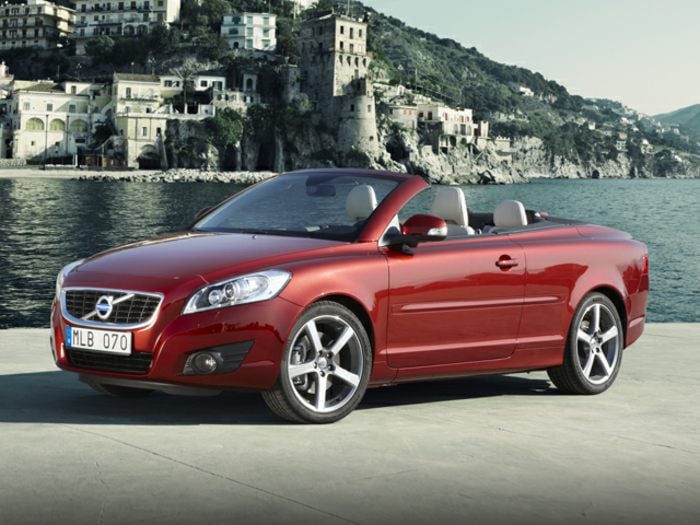
2012 Volvo C70


Overview
Volvo's retractable hardtop Actualizar of menor, el a�o nuevo estilo Pasado with a C70. C70 capacidad para el cuatro personas holding a y y performed Infiniti G37 and Lexus IS convertible.

Exterior
With the upgrade last year, the front of the C70 has a resemblance to the S60 sedan and XC60 crossover. In general, the nose is wedge shaped and has an air inlet higher than the previous version. LED taillights in the rear give a contemporary twist. Exterior features include:

- Available headlamp washers and wipers
- Available adaptive xenon high intensity discharge headlights
- Standard 17-inch wheels
- Available 18-inch wheels

Interior
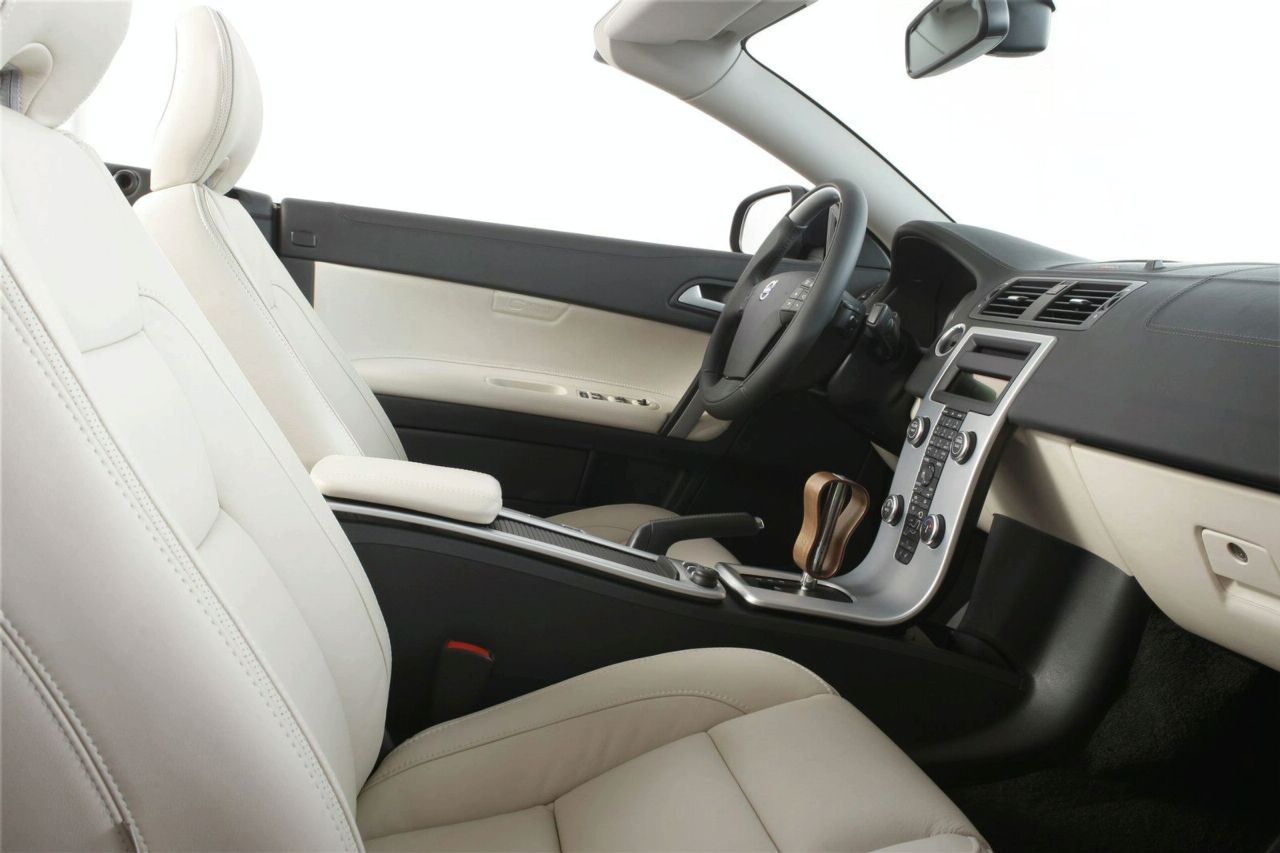
Volvo designed the instrument panel to give more watch dial design. The leather is standard, and the cranberry-colored leather is optional. Other options include heated front seats, Black Oak inlays, humidity sensor and indoor air quality, which captures allergens. Interior features include:

- Leather seats as standard
- Conditioning as standard dual zone control
- Standard CD stereo with auxiliary socket
- Trip computer Standard
- Navigation system with traffic data in real time


Under The Hood
The front-drive C70 is powered by a turbocharged five-cylinder. Mechanical features include:

- 227 horsepower and 236 lb-ft of torque
- A five-speed automatic

Safety
Side curtain airbags are standard and impact. Volvo says that the curtains are designed to remain deployed in the event of rollover. Additional security features include:

- Four-wheel disc anti-lock brakes
- Traction Control Standard
- The standard electronic stability system
- Standard active head restraints

2012 Volvo C30


Overview
Volvo had a dose-style high-segment hatchback range with the introduction of the C30 a few years ago. The four-seat C30 is based on the Volvo S40 sedan, which was abandoned - with the V50 family related - 2012. The C30 competes with other small luxury cars like the Volkswagen GTI and Mini Cooper S.

Exterior
C30 has received greater scale in 2011, similar to the Volvo XC60 crossover and gives a modern look. One of the design elements most interesting in the C30 is its two-door hatch glass. Volvo says it gives the impression of opening inwards, and the spectators can see the control center dash from behind. Exterior features include:

- Headlamp washers and wipers available
- Available adaptive xenon high intensity discharge
- 17-inch T5
- 18-inch wheels of the T5 R-Design

Interior
Volvo says that four adults can fit inside the compact C30. Rear bucket seats are placed slightly inward of the front seats, which allows for greater forward visibility. In front, the dashboard has a central panel ultra thin, which integrates audio and climate. Interior features include:

- Cloth seats as standard, leather optional
- Standard dual-zone air conditioning
- Standard CD stereo with auxiliary socket
- Trip computer Standard
- Optional stereo upgrade
- Optional navigation system with traffic data in real time
- Backseat bending forward


Under the Hood
The preliminary DRIVe C30 is powered by a turbocharged 2.5-liter inline five-cylinder engine. Mechanical features include:

- 227 horsepower and 236 lb-ft of torque
- Six-speed manual as standard
- A five-speed automatic optional

Safety
Safety features include:

- Four-wheel disc anti-lock brakes
- Standard side airbags and a half
- Traction control standard
- Standard electronic stability control system
- Standard front active headrests
- An optional blind spot warning system

2011 Volvo S40


Overview
Smallest Volvo sedan, the compact S40, comes in T5 and T5 trim levels R-Design. Competitors include the Saab 9-3 and Audi A4. The less powerful "i" version was abandoned in 2011, while the engine is the line 227-horsepower five-cylinder engine in the T5 models.

Exterior
Little has changed on the outside, since 2009, the redesign, but Volvo says the 2011 models get a larger Volvo logo on the grill. Exterior features include:

- Standard integrated turn signals
- Fog lights as standard
- Standard power mirrors and heated
- Standard 17-inch
- The optional glass moonroof
- Optional 18-inch wheels
- Optional bi-xenon headlights with articulating headlamps

Interior
The standard five-person interior decor is a bit 'rough, felt fabric, which is said to be inspired by sport. Leather upholstery is available. T5 R-Design trim with a unique aluminum sports pedals, gear knob and sport steering wheel. Interior features include:

- Standard locks and windows express up / down
- The standard eight-speaker audio system with six CD in-dash CD player
- Optional heated front seats
- Optional navigation system


Under The Hood
Only one engine is available for 2011, Volvo has dropped manual transmissions from the S40 line. Drivers have the option to shift gears via the automatic transmission. Four-wheel drive was also removed from the S40. Mechanical features include:

- 227 hp supercharged 2.5-liter five-cylinder 236 lb-ft of torque
- Five-speed automatic
- FWD
- Optional keyless start

Safety
Volvo is known for its safety and the S40 is no different. The car has a long list of standard safety features, including automatic activation of hazard warning lights illuminated when the deployment of airbags.

- Other safety features include:
- Standard front airbags, side impact and side
- The standard ABS with electronic brake force distribution
- Standard electronic stability control and traction control
- Optional 18-inch wheels
- An optional blind spot warning system
- Standard Security System

Report: Volvo to launch new performance line with production C30 PCP

Volvo C30 PCP


If you ever looked at those old Volvo ads that suggested their station wagons were the next logical step up from a Lotus, well, you can stop snickering. Sure, it may still be a long shot, but Volvo appears to be getting serious about offering performance-oriented automobiles.

A couple of weeks ago, we brought you a report that indicated Volvo was forging a closer relationship with Polestar, the racing outfit that fields the company's entries in the Scandinavian and World Touring Car Championships. Volvo, it seemed, had already turned to Polestar to squeeze a bit of extra juice from its S60 and XC60 R-Design models, and according to the report, was prepared to utilize Polestar's talents even more in the future.

A clearer picture of that that partnership is now emerging, and so far, it looks promising. Their first collaborative project is tipped to be a production version of the baby-blue, 400-horsepower, all-wheel drive C30 hatchback unveiled last year. If given the go-ahead, we could be looking at a limited run of 500 cars priced around �50,000 in the UK � about the same as a BMW M3.

Like the concept, the production Volvo/Polestar C30 would be the first to carry the PCP badge � referring not to the chemical narcotic, but standing, somewhat repetitively, for Performance Concept Prototype. Similar high-performance versions of Volvo's other products would follow and wear the same nameplate, creating a subdivision for Volvo that would be equivalent to what Mercedes-Benz has in AMG and what BMW does with its M division.
[Source: What Car?]

2010 Volvo XC90

2010 Volvo XC90 in red colour


Volvo does things a little differently from other premium brands in the automotive world. For this Swedish manufacturer, safety and kid-friendliness are just as important as luxury amenities and driving performance, and in no vehicle is this more apparent than the Volvo XC90, a mid size seven-passenger SUV.


Innovative safety features aside, the 2010 XC90 is merely adequate relative to the premium mid size SUV competition. Zestier performance is available elsewhere, as are more cavernous cargo holds. With more and more modern competitors measuring up to Volvo's high safety standards, the aging XC90 isn't the slam dunk for families that Volvo products used to be. It remains capable, though, and arguably safer than ever thanks to some new tricks.


The Volvo XC90 is available in two versions: 3.2 and V8. Available with front- or all-wheel drive, the 3.2 is the entry-level model and carries a 3.2-liter in line six-cylinder engine rated for 235 horsepower. Mileage suffers a bit on the XC90 V8, but the 311-hp 4.4-liter V8 provides strong acceleration, moving this 4,600-pound SUV to 60 mph in 7.6 seconds. All-wheel drive is standard with the V8.


The 3.2 comes with five-passenger seating (with the third-row seat optional), while the V8 comes with seven-passenger seating. As this is a premium SUV, almost all major safety and convenience features are included, even on the base model. Major options include a rear entertainment system with dual screens, a DVD-based navigation system, a Dolby Pro Logic II surround-sound audio system and an interior air quality system, as well as an ultra-luxurious executive package for the V8 model.


Easily one of the safest SUVs on the market, the 2010 Volvo XC90 pioneered Roll Stability Control. This bit of technology uses a gyro sensor to identify every SUV owner's greatest fear, a potential rollover, and activates the stability control system to try to avert it. Another interesting feature is the Blind Spot Information System (BLIS), which monitors images from a pair of cameras mounted in the side mirrors and warns the driver via an indicator light when another vehicle moves into the XC90's blind spot. Of course, the XC90 also provides staples like side curtain airbag protection for all three rows, anti-whiplash seats and an emergency communications system. Volvo crash safety is legendary, and indeed, this mid size SUV has scored well in NHTSA and IIHS testing.


we've found that the 2010 XC90 drives just as you'd expect a safe, heavy 2010 Volvo SUV to drive. Ride quality is smooth and the cabin stays quiet, while handling is competent but not particularly sporty. Equipped with AWD, the XC90 makes an excellent snow vehicle but isn't intended for serious off-road romps. V8-powered models are considerably more satisfying to drive than six-cylinder XC90s.Despite its advancing age, the seven-passenger


Volvo XC90 is one of our top recommendations for families shopping for an SUV. Although its on-road performance is merely average as luxury SUVs go, the XC90 still offers a winning combination of safety, solidity and style.

Volvo Concept Universe

Volvo Concept Universe in golden look


At the Shanghai Auto Show 2011 presents the Volvo Car Corporation, the extravagant vehicle study, Concept Universe. It is an impressive luxury sedan, which shows a new design language, but also the elegant lines of classic Volvo models considered.


The study Universe Concept was developed under the proviso to meet the highest standards of design, comfort and luxury. She glances into the future with a coupe-like roof line, while classical elements which reflect the history of Volvo.


The interior of the study is designed in a modern and comfortable ambience, everything is user friendly and easily interpreted in a refreshing way.

Report: Volvo and Pininfarina end C70 joint venture

http://www.sportscarsfans.com/images/script/image.php?id=3DCC_4DAC094A

Volvo has announced it will take sole ownership of its joint manufacturing facility with Pininfarina. The Pininfarinia Sverige AB plant in Uddevalla, Sweden, only builds the Volvo C70 convertible. According to Volvo, the changeover will take place in 2013, and the automaker will continue to build C70s at the plant.

Volvo and Pininfarina have been bedfellows at the plant since Volvo began building C70s in 2003. The car moved just over 4,000 units in 2010, down nearly two percent from the 2009 total.

[Source: Autoweek]

Volvo S60 Race Cars by K-PAX Racing

Volvo S60 in speedy look


K-PAX Racing to Campaign New Volvo S60 in World Challenge GT in 2011


Englewood, Colo. (Feb. 14, 2011) - K-PAX Racing, the World Challenge GT Manufacturers' and Drivers' champion in 2010, will return to defend its titles in 2011 with two new Volvo S60s that reflect the car's recent redesign.


The new all-wheel-drive Volvo S60s will be introduced at Miller Motorsports Park in Tooele, Utah, in late April for the fourth round of the World Challenge schedule.


"For the first three races, we'll run the body style that took us to last year's championships," said Jim Haughey, Team Owner of K-PAX Racing. "Once fans see the new cars, I think they'll be very impressed."


The 2011 World Challenge season begins with two races in St. Petersburg, Fla., the weekend of March 25-27. The World Challenge is North America's top production car-based racing series. Divided into three classes (World Challenge GT, World Challenge GTS, and World Challenge Touring Car), each race features a thrilling standing start, adrenaline-filled, door-to-door action and world-class drivers.


World Challenge features cars from the world's most popular manufacturers - race-prepped versions of the cars driven on the streets. Sanctioned by SCCA Pro Racing, World Challenge races at North America's premier road and temporary street courses.


For more information about World Challenge, visit http://www.world-challenge.com/.


For more information on K-PAX Racing, visit http://www.kpaxracing.com/ and follow the team on Twitter @kpaxracing.

Heico Sportiv Volvo XC90

Heico Sportiv Volvo XC90 side view


Due to its continued success, Volvo will be retaining the XC90 in its production program. HEICO SPORTIV is revitalizing the SUV's design and is now presenting an entirely new bodykit.


"There's life in the old dog yet!" could be the caption beneath the current Volvo XC90, considering the model has been on the market since 2003. Given the constant level of demand for this vehicle, however, Volvo has chosen to continue producing the Sweden SUV until model year 2014.


HEICO SPORTIV saw this as an advantageous opening and seized the opportunity to take an extremely novel step: the development of an entirely new bodykit. "Our new bodykit intends to give dealerships an attractive opportunity to offer additional buying incentives," explains HEICO SPORTIV CEO, Holger Hedtke, adding: "Around the globe, the Volvo XC90 has an unwavering fan club that will certainly applaud the modern, self-assured design from HEICO SPORTIV."


Complete and perfectly integrated.

The Volvo XC90 by HEICO SPORTIV has a perfectly integrated design. The six-part bodykit picks up on the current Volvo XC60's dynamic use of forms, fitting like a custom-made suit. The one-piece front skirt replaces the series-produced central and side panels and has a stainless steel stay located in front of the cooling air outlet. The side skirts are mounted on top of the original parts, with the rear skirt fully replacing the standard one. And - typical for HEICO SPORTIV - the rear skirt accommodates the four-pipe exhaust system with oval chrome end tips which can be extended optionally with a stainless steel inlay.


All plastic parts are produced from high quality PUR-R-RIM and are easy to fit. The HEICO SPORTIV Bodykit will be available from May 2011 for the XC90 from model year 2007 onwards and can be delivered for all engine versions.

Volvo Ocean Race limited edition models get nautical by nature

http://www.sportscarsfans.com/images/script/image.php?id=AB24_4D7F2D5E

Volvo is celebrating the start of its fourth Ocean Race by releasing special edition models of its V60, XC60 and XC70 in the UK. The cars will be available to order starting in April, with the first deliveries expected to take place in July.

Engine options are yet to be determined, but the cars will have special interiors in sail-reminiscent off-black or beige, and the seatbacks come embossed with the Volvo Ocean Race logo. There will also be two special exterior colors available, dubbed �Volvo Ocean Blue II� and �Electric Silver.�

Along with the seats, the door panels and cargo covers get the Ocean Race treatment, with special script and stitching. If that isn�t enough Nautical madness for you, you can rest your Sperrys on a set of textile sail-inspired floor mats to cap it all off.

Volvo is expecting to move about 7,500 of the special editions per year, targeting England, Germany and Italy in particular. No word yet on pricing or whether the cars come with a stuffed parrot for full-on pirate effect.

[Source: Volvo]

PRESS RELEASE:

VOLVO OCEAN RACE LIMITED EDITIONS - THREE MODELS INSPIRED BY THE WORLD�S MOST CHALLENGING SAILING RACE

The Volvo Ocean Race is the world�s most grueling sailing adventure, testing the sailing prowess and human endeavour of its participants and competing in all four corners of the globe. To celebrate the start of the fourth Volvo Ocean Race, Volvo Cars have launched three limited edition models specifically designed with the sailing adventure in mind. Design details inspired by life on board a boat help distinguish these models from their standard counterparts with unique interior and exterior refinements.

Launched at the Geneva Motorshow, three of Volvo�s models will be available in the UK with this special Ocean Race inspired specification, allowing customers to own a piece of Volvo�s involvement in the world�s most challenging of sailing events.

The Volvo Ocean Race Editions will be available to order in the new Volvo V60, XC60 and XC70 from April 2011 with customer cars expected to be delivered in July 2011. Engine availability and pricing have yet to be confirmed in the UK.

Customers can choose between two luxurious exterior colours, Volvo Ocean Blue II or Electric Silver, in conjunction with the sail-inspired leather upholstery in off-black and soft beige with embossed Volvo Ocean Race Logo on the backrest of the front seats.

Other features are the uniquely designed aluminium wheels, chromed detailing and the Volvo Ocean Race emblem on the front wings.

Inside the car, the seats and door panels feature an added level of craftsmanship. The load cover displays the Volvo Ocean Race logo in print with stitching and sheet detailing, there are textile floor mats with clew-inspired (lower corner of a sail) details in aluminium and the tread plate in aluminium is embossed with the text �Volvo Ocean Race�. In addition, the Human Machine Interface start-up display shows the Volvo Ocean Race logo and text.

Volvo Cars estimates to sell about 7,500 cars globally. The four largest markets are expected to be Germany, Sweden, Great Britain and Italy. Other markets outside Europe that will be involved in the race will also sell the Ocean Race Editions.

Facts about the race:

The Volvo Ocean Race is the world�s most gruelling ocean adventure. An extreme race that consists of 9 legs. The Volvo Ocean Race starts in Alicante on October 29 and finishes in Galway, Ireland, on July 7, 2012. The Volvo Ocean Race will also stop in Cape Town (South Africa,Abu Dhabi (United Arab Emirates), Sanya (China), Auckland (New Zealand), Itaja� (Brazil), Miami (the USA), Lisbon (Portugal) and Lorient (France). The event also includes exciting inshore races in all the ports.

For more detailed information about the Volvo Ocean Race, visit http://www.volvooceanrace.com/

Paris 2010: Volvo V60 and S60 R-Design models look a good bit naughtier

2011 Volvo V60 and S60 R-Design

We recently drove the 2011 Volvo S60 in the wilds of Oregon and came away rather impressed with both its performance and in-person aesthetics. That said, we generally don't begrudge a bit more visual aggression, and to that end, Volvo has obliged with a pair of new R-Design models here at the Paris Motor Show that includes the S60 sedan and its not-for-North-America V60, a wagon so attractive that we couldn't help but lead off our live coverage with it.

In either case, the well-integrated R-Design package consists of a distinct front fascia, rear bumper cutout with diffuser and bespoke 18-inch alloys in a fetching smoked finish. While there isn't any more power under the hood, the 300-horsepower 3.0-liter inline turbo six should fit the bill rather nicely, especially with its generous 325 pound-feet of torque. No word on any shift-map changes for the six-speed automatic gearbox, but what we'd really like to see for this sportier S60 is a set of paddle shifters.

That aside, R-Design models ought to handle a bit better than their more common brethren, as they hug the ground a bit more closely thanks to shorter, stiffer coils and monotube shocks. The rest of the suspension gets beefed up, too, with firmer bushings and a front strut-tower brace.

Beijing 2010: Geely Gleagle GS

Geely Gleagle GS


The first time we saw something that could roughly be equated to a sport coupe from Geely was a few years ago at the Detroit Auto Show. That red car had some enormous panel gaps and dubious styling. My, how times change. The star of Geely's new midrange Gleagle brand (we're pretty sure it doesn't come across as oddly in Chinese as it does in English) was the GS coupe.

Similar in size to Scion Tc, the GS is powered by a 1.3-liter turbocharged inline four producing 127 horsepower. It can be paired with either a six-speed manual gearbox or a seven-speed dual clutch unit. If any Chinese automaker is going to make it to the U.S., Geely seems the most likely and its purchase of Volvo could even give it access to a sales network.

Volvo C70, 2010

Volvo C70, 2010


The Volvo C70 is in actual fact two attractive cars in one. It is as much an elegant coupe as it is a sporty convertible. With the same gentle, clean lines in both versions. Above all, however, the Volvo C70 is a car to enjoy. For people who reward themselves with the best in life.

"The Volvo C70 has classic convertible lines and a strong identity of its own. What we have done is to carefully redesign the front and rear so they harmonise more with both today's and tomorrow's Volvo models. We have also increased the exclusiveness of the materials and trim details to enhance the atmosphere of luxury and enjoyment inside the car," explains Fedde Talsma, Exterior Chief Designer at Volvo Cars.

Modernised, self-assured front
With its new front, the Volvo C70 reveals traces of the Volvo S60 Concept Car that was unveiled in early 2009. Thereby the Volvo C70 is upgraded to relate more closely to the design language of the larger cars in the Volvo model range

Bodywork details such as the front wings have also been redesigned, contributing to the decidedly altered appearance. The nose is more wedge-shaped and has been given added three-dimensional depth by moving some elements of the front both longitudinally and vertically. The new headlamps and the d�cor around the foglamps, for instance, have been angled offset up and to the rear, at the same time as the detailing of the lower grille has been enhanced.
The Volvo C70
The new Volvo C70 launched at the Frankfurt Motor Show in mid-September 2009 has the same smart three-piece steel roof, practical seating for four adults and world-leading convertible safety as before. With an updated design and elevated premium feel, the Volvo C70 also delivers an "I want" aura of absolute world class.

Modernised, self-assured front
With its new front, the Volvo C70 reveals traces of the Volvo S60 Concept Car that was unveiled in early 2009. Thereby the Volvo C70 is upgraded to relate more closely to the design language of the larger cars in the Volvo model range


The bodywork details such as the front wings have also been redesigned, contributing to the decidedly altered appearance. The nose is more wedge-shaped and has been given added three-dimensional depth by moving some elements of the front both longitudinally and vertically. The new headlamps and the d�cor around the foglamps, for instance, have been angled offset up and to the rear, at the same time as the detailing of the lower grille has been enhanced.

Volvo S60 Concept, 2009

Volvo S60 Concept, 2009


The Scandinavian inspiration
The front of the Volvo S60 Concept sports the enlarged iron mark in the trapezoidal grille. The two lamps that flank the grill emphasise the vertical stance of the front and highlight the bonnet's V-shape. The angled headlamps flow up into the strongly sculptured bonnet and combined with the lower air intake's reverse trapezoidal shape, this gives the concept car a very expressive "face".

Viewed from the side, the concept car's slim coupe roofline and window graphics are accompanied by an entirely new shoulder line, forming a gentle double wave, stretching from the headlamps all the way to the rear. Both the seven-spoke 20-inch wheels and the tread of the low-profile tyres have been specially designed, while the bronze-painted brake callipers match the "Warm Liquid Copper" livery.

The unique rear parallelogram doors offer a spectacular show when they are opened and closed. Door opening is initiated by pressing a button and the movement starts off in the traditional way. In the next phase, the forward section swings out away from the car's body and the door glides parallel with the side of the car until it reaches its end position by the rear wheel. Since the car does not have a B-pillar between the front and rear seats, this door configuration offers exceptionally generous entry and exit access.

The transparent attachment of the door mirrors illuminates and becomes part of the indicator function. The panorama roof is another ingredient that contributes to the concept car's airy Scandinavian aura.

The Viking longboats in the headlamps
In each of the headlamps, the lights create a silhouette of two miniature Viking longboats sailing side by side, one for main beam and one for dipped beam. When driving in the dark, the light is reflected from the concealed, upward-facing High Performance LED bulbs, projected ahead by the ships' filled sails.
A closer look reveals more detail. The compact cooling system for the LED bulbs has protruding cooling blocks made out of aluminum, semi-visible under the ships' hulls. This design creates the illusion of shimmering glass panels that float above a dark and mysterious Scandinavian sea.
The Inspiration from the racing track
The tail lamps, which follow the curve of the rear shoulders, are as advanced as the headlamps. When switched off, the lamp panels show no trace of the traditional red or yellow. But when activated, the position marker lights, brake lights and turn indicators come on in their correct colours with the help of LED bulbs. The solid glass panel is sectioned into horizontal "slices" that create the visual impression of a three-dimensional architect drawing when the lights come on.
At the rear there is also a retractable diffuser that adjusts with vehicle speed to give better aerodynamic properties.
New technology detects pedestrians in the danger zone
The Volvo S60 Concept also presents a safety innovation that can detect a pedestrian who steps out into the path of the car and the car's full braking power is automatically activated if the driver does not respond to the danger. The technology, Collision Warning with Full Auto Brake and pedestrian detection, will be introduced in the all-new Volvo S60.

Elevates the brand's image
The Volvo S60 Concept was created to pave the way for Volvo Cars in one of the automotive world's most focused segments, characterised by razor-sharp competition.


Geneva 2010: Volvo S60

2011 Volvo S60

American automakers are streamlining, big time. But we're looking at a Swedish car. In Switzerland. So what does this have to do with Detroit? Well, a lot. But not for long. Volvo's about to change hands from Ford to China's Geely, and (like fellow Swedish automaker Saab now under Spyker's wing) if it's going to survive, it'll need a solid product. This could be it.

Previewed in concept form at the Detroit Auto Show, the production version of the new Volvo S60 made its debut here at the Geneva Motor Show. A few details inevitably had to change on the bumpy road from concept to production, among them the anteater nose of the show car which was thankfully reshaped due to pedestrian impact requirements. And when it comes down to it, that's what Volvo's all about: safety. So it comes as little surprise that the new S60 also debuts the company's new Collision Warning system that will, if necessary, fully engage the brakes.

The S60 makes its debut in T6 guise, packing a turbocharged 3.0-liter inline six with 300 horsepower and 325 lb-ft of torque. More engines will be on offer worldwide once new S60 car reaches the market over the course of the coming months.

[Source: Volvo]

ALL-NEW VOLVO S60 MAKES ITS WORLD DEBUT AT GENEVA MOTOR SHOW
  • All-New Volvo S60 makes its international debut at Geneva Motor Show 2010
  • New Dynamic chassis tuned for an active drive
  • Features the ground-breaking Pedestrian Detection with Full Auto Brake technology
Today, Tuesday 2 March 2010, the all-new Volvo S60 made its international debut at the Geneva Motor Show. It launches into one of the automotive world's most competitive segments backed by an elegant new coup�-like design, dynamic driving characteristics and ground-breaking Pedestrian Detection safety technology.

In its overall shape, the all-new S60 is a coup�; sportier and more distinct than any previous Volvo. In its design, it promises excellent driving characteristics, even before you get behind the wheel. To deliver the highest levels of driving enjoyment, the chassis team have refined every single detail that influences a car's driving properties and fine-tuned the driving experience to offer the most dynamic ride ever seen before on a Volvo.

The all-new S60 range will be available from launch with a choice of two diesels and one petrol engine, including an uprated high-performance 3.0-litre T6 petrol version with 304bhp, a 2.4-litre 205bhp D5 and a 2.0-litre 163bhp D3 powerplant. A DRIVe version powered by a 1.6-litre diesel engine with CO2 emissions of approximately 115g/km and fuel economy of up to 65.7mpg (combined cycle, preliminary figure) will join the range later in 2011.

DESIGN
In its overall shape, the all-new S60 is a four-door coup� - sportier and more distinct than any previous Volvo.

The C-pillar of the all-new S60 stretches all the way to the tail lamps � and the slim coup� -like roof line is accompanied by a new contour on the shoulders on either side of the lower body. This creates a gentle double wave in the line from the headlamps at the front to the tail lamps at the rear.

The S60's athletic stance is accentuated by a sculpted bonnet and short overhangs front and rear, plus what Volvo's design team calls the "racetrack" design. The car's lines do not end abruptly but instead continue to flow organically, echoing the smooth shapes of the racetrack.

This sporty appearance can be further enhanced with an exterior styling kit that incorporates front and rear skid plates, two frames in the lower valence, side scuff plates, exhaust tailpipe finishers and 18-inch alloy wheels.

Volvo's designers have also used LED (Light Emitting Diode) technology to create distinctive, signature lights at the front and rear that make the car clearly identifiable as an S60, even in the dark.

The all-new Volvo S60 is being introduced with a range of exterior colours including two new shades: Vibrant Copper and Electrum Gold.

NEW DYNAMIC CHASSIS
The new Volvo S60 is the most sporting Volvo ever built and during the development process, the chassis team refined every single detail to fine tune the driving experience. The result of their labours is a newly-developed Dynamic chassis, standard on every new Volvo S60.

The steering gear ratio is 10 per cent faster than in previous models to give enhanced steering feel and sharper response. The steering column's thicker tubing and stiffer bushes have increased torsional rigidity by 100 per cent. This also contributes to the increased feeling of direct contact with the wheels and the road.

The front spring struts have thicker pistons compared with the sports chassis in the Volvo S80. The resultant 47 per cent increase of stiffness means that the body structure is better able to absorb lateral loads. The springs themselves are shorter and stiffer than before and the Eigen frequency has increased by 10 per cent. At the front, spring strut mounting stiffness has increased by 50 per cent. The front and rear subframe bushes are up to twice as stiff compared with previous models. The link arm bushings have also been optimised for sporty driving and full control.

The damper mountings at the rear are made of PUR (polyurethane) instead of rubber to provide better balance between comfort and dynamic control.

Stefan S�llqvist, responsible for the S60 chassis development explained: "We spent many weeks fine-tuning the dampers out in the English countryside. We drove on old Roman roads that have only ever received a few layers of tarmac over the centuries � a perfect environment for finding the right damping qualities."

Advanced Stability Control
The Dynamic Stability and Traction Control (DSTC) in the all-new S60 has a number of sophisticated features to improve driving pleasure and safety. The S60 is the first saloon on the market with Volvo's Advanced Stability Control. With a new roll sensor, it's possible to identify any skidding tendency at a very early stage. This means that the anti-skid system can step in earlier and with greater precision. Advanced Stability Control is a great asset in dynamic driving that involves considerable lateral forces.

New Corner Traction Control for smoother curves
The dynamic new chassis is backed up by a range of electronic systems that further sharpen the sporty driving experience. Corner Traction Control is a new feature that uses torque vectoring so the car takes corners more smoothly. This technology is a further refinement of the DSTC system. When taking a curve, the car's inner driven wheel is braked at the same time as more power is transmitted to the outer driven wheel. This allows the driver to take the corner more tightly while reducing any tendency to understeer.

Advanced, integrated braking functions
A highly advanced braking system is an important part of the dynamic driving properties of the all-new S60. A number of features interact to provide the shortest possible stopping distance in all scenarios. Technology includes:
  • Ready Alert Brakes can predict when emergency braking is needed. The brake calipers are applied lightly to the brake discs even before the driver presses the brake pedal.
  • Hydraulic Brake Assist helps the driver brake in the shortest possible distance. In an emergency situation where the driver does not press the brake pedal fast or hard enough, Hydraulic Brake Assist can help utilise the ABS system optimally and thus shorten the overall braking distance.
  • Optimised Hydraulic Brakes is a system that amplifies braking ability during firm braking by using hydraulics to compensate for low vacuum pressure in the brake servo.
  • Fading Brake Support uses the hydraulic system to gradually build up brake pressure during long, hard braking. This helps reduce the risk of brake fade and maintains pedal feel.
  • The all-new S60 is equipped with an Electronic Parking Brakeas standard.

FOUR-C as an option
All variants of the new S60 can be specified with the FOUR-C active chassis, which has been modified and refined for better control and comfort. This is an advanced, self-adjusting chassis system that uses a number of sensors to continuously monitor the car's behaviour. In mere fractions of a second, the dampers are adjusted to suit the current driving situation.

With three alternative chassis settings, all it takes is for the driver to press a button to alter the car's character: Comfort, Sport or Advanced.

ENGINE RANGE
At launch, the S60 range will be available with a choice of two diesels and one petrol engine. All the engines have been developed to meet the highest demands on sporty, dynamic driving with competitive fuel consumption.

All-new Volvo S60 engine programme from start of production:

Petrol engines Displacement Configuration Output Torque
T6 AWD 3.0 6-cyl in-line 304 bhp 440 Nm
Diesel engines Displacement Configuration Output Torque
D5 2.4 5-cyl in-line 205 bhp 420 Nm
D3 2.0 5-cyl in-line 163 bhp 400 Nm
Two five-cylinder turbo diesels
The high-performance twin turbo D5 produces 205 horsepower and 420Nm of torque. Acceleration from 0-62mph takes 7.8 seconds (manual and automatic) and top speed is 146mph (manual) and 143mph (automatic). In the most recent D5 version, introduced in spring 2009, the performance and driveability requirements have been met by fitting two turbochargers of different sizes, one taking over from the other and providing added power within a broader rev range. The result is alert response and rapid acceleration at all speeds, with seamless transfers in the turbo rev range between the two turbochargers. The complementary properties of the two turbos combine high performance with lower fuel consumption of 47.9mpg (EU Combined, preliminary figure).

Advanced fuel injection technology using piezoelectric fuel valves gives exact distribution of fuel in the combustion chamber, with efficient combustion and low emissions as a result.

Smaller displacement lowers fuel consumption
In addition there is the newly-developed 2.0-litre D3 engine producing 163hp and 400Nm of torque. Acceleration from 0-62mph takes 9.2 seconds (manual and automatic) and top speed is 137mph (manual) and 134 mph (automatic).

The new five-cylinder 2.0D is, in principle, the same engine as the present 2.4D, but cylinder capacity has been reduced with a shorter stroke to optimise fuel consumption. With a manual gearbox fuel consumption is now up to 54.3mpg (EU Combined, preliminary figure).

The engine has been optimised to offer reduced fuel consumption and the injection system has a different type of piezoelectrical fuel valve compared with the D5 engine. These valves keep fuel consumption to a minimum thanks to exceptionally fast and precise injection pulses under high pressure. This results in far more efficient combustion.

In order to give the car better driving properties, the turbocharger has been fine-tuned for high torque from low revs.

Both turbodiesels are available with six-speed manual gearbox as standard or an optional six-speed automatic transmission. A maintenance-free particulate filter that traps about 95 percent of the soot particles is fitted as standard in both engines.

High-performance T6 petrol engine
The 3.0-litre T6 petrol engine generates 304 hp and 440 Nm of torque, enhancing acceleration and smooth progress on the road. Acceleration from 0-62 mph takes 6.5 seconds and top speed is 155 mph. Volvo Cars' engine specialists have succeeded in cutting fuel consumption by about 10 per cent to 27.7 mpg (EU Combined, preliminary figure).

The engine's power is delivered to the wheels via Volvo's second-generation six-speed automatic Geartronic transmission. New valves and lower friction mean faster gear changes than before. AWD (All Wheel Drive) is standard on the T6.

Engines to be added during first year of production:

Petrol engines Displacement Configuration Output Torque
T5 2.0 4-cyl in-line 240 bhp 320 Nm
T4 1.6 4 cyl in-line 180 bhp 240 Nm
T3 1.6 4-cyl in-line 150 bhp 240 Nm

Diesel engines Displacement Configuration Output Torque
1.6 D DRIVe 1.6 4-cyl in-line 115 bhp 270 Nm
DRIVe diesel below 115 g/km
During the first year of production a DRIVe version of the all-new S60 will be introduced, featuring a new 1.6-litre diesel engine. Fuel consumption will be an impressive 65.7mpg (EU Combined, preliminary figure), corresponding to CO2 emissions approximately below 115 g/km. The uprated engine produces 115 hp and 270 Nm of torque, and will only be available with a six-speed manual gearbox.

Later during the first year of production, the all-new S60 will also become available with a 2.0 GTDi variant (T5) producing 240 hp and torque of 320 Nm. Furthermore, there will be a 1.6-litre GTDi engine available in two versions: 180 hp (T4) and 150 hp (T3) with torque of 240 Nm.

All the GTDi engines will be available in combination with Volvo's optional automatic six-speed Powershift transmission or a six-speed manual gearbox as standard. The Powershift concept works like two parallel manual gearboxes with separate clutches, giving quick and fuel-saving gearchanges.

Further information on these engines will be communicated at a later date.

PEDESTRIAN DETECTION WITH FULL AUTO BRAKE
The all-new Volvo S60 features the ground breaking Pedestrian Detection with Full Auto Brake system. Pedestrian Detection consists of a newly developed radar unit integrated into the car's grille, a camera fitted in front of the interior rear-view mirror, and a central control unit. The radar's task is to detect any object in front of the car and to determine the distance to it. The camera determines what type of object it is.

The full auto brake part of the technology also responds to vehicles in front that are at a standstill or that are moving in the same direction as the car fitted with the system.

The newly developed dual-mode radar's much wider field of vision ensures that pedestrians about to step into the roadway can be detected early on. The camera has higher resolution than the previous-generation auto brake which makes it possible to detect the pedestrian's pattern of movement.

"The auto-brake system requires that the object is confirmed by both the radar and the camera. Thanks to the advanced sensor technology used, it is now possible to increase to full braking power," explains Thomas Broberg, Senior Safety Advisor at Volvo Cars.

"Detecting pedestrians with sufficiently high reliability has been a complex challenge. Our innovative technology is programmed to trace a pedestrian's pattern of movement and also to calculate whether he or she is likely to step into the road in front of the car. The system can detect pedestrians who are 80 cm tall and upwards, that is to say including children."

New technology permits full braking force
In an emergency situation the driver first receives an audible warning combined with a flashing light in the windscreen's head-up display. In order to generate an immediate, intuitive reaction, this warning resembles a brake light. At the same time, the car's brakes are pre-charged. If the driver does not react to the warning and an accident is imminent, full braking power is automatically applied.

This technology has the same limitations as the human eye, and just like us it "sees" less well in the dark and in poor weather.

Pedestrian Detection with Full Auto Brake can avoid a collision with a pedestrian at speeds of up to 21mph if the driver does not react in time. At higher speeds, the focus is on reducing the car's speed as much as possible prior to the impact. The speed reduction is up to 21mph.

Statistics reveal that the car's speed has considerable importance for the outcome of the accident. A lower speed of impact means that the risk of serious injury is significantly reduced. For instance, if speed is cut from 30mph to 15mph, Pedestrian Detection with full auto brake is expected to reduce the fatality risk by as much as 20 per cent and in certain cases by up to 85 per cent.

City Safety
The all-new Volvo S60 also features City Safety as standard, as seen on its bigger brother - the XC60. The system can reduce or even entirely avoid low-speed rear-end impacts at speeds up to 18mph.

Additional safety systems available:
  • Driver Alert Control (DAC). A unique technology to alert tired and distracted drivers. This function monitors the car's progress between the lane markers and warns the driver if his or her driving pattern changes in a random or uncontrolled way.
  • Blind Spot Information System (BLIS) helps detect vehicles in the rear blind spot on both sides of the car. A warning lamp beside the relevant door mirror comes on to alert the driver to the danger.
  • Active Bi-Xenon Lights are articulated headlights that follow the curve of the road. For best possibility illumination when driving in the dark on twisting roads.
  • Lane Departure Warning alerts the driver if the car runs across the lane markers without the turn indicator being used.
  • Advanced Side Impact Protection System
  • Seat-mounted side airbags
  • Improved Inflatable Curtains
  • Whiplash Protection System

INSIDE THE CABIN
Drivers and passengers can experience the agile new chassis in complete comfort thanks to the spacious and refined cabin. The interior of the new S60 has been designed with driver-oriented details, but is still a five-seater car offering comfortable space for all its occupants. The sculpted outer rear seats give the passenger in the middle welcome side support. Knee space in the rear seat has increased by 30 mm compared with the previous-generation S60.

The designers also took the exterior's racetrack inspiration into the interior of the car. "Every detail looks like it's in motion. All the lines 'embrace' the driver's cockpit. The instruments and centre stack are angled towards the driver to create a sensation of focus and control. The new dynamic three-spoke steering wheel and the new sports seats with extra side supports are standard. There isn't any compromise anywhere in the dynamic approach we adopted from the very beginning," says Jonathan Disley, head of interior design in the all-new Volvo S60.

Easily accessible storage space is another important part of interior comfort and convenience. The all-new Volvo S60 has a storage compartment behind the centre stack and another in the centre console armrest, while in the door pockets there is space for books, maps, soft-drink bottles and cans. Both the front and rear seat occupants have seat pockets within easy reach. The rear seat splits 40/60 and the boot opening has been made 100 mm wider than in the previous-generation S60.

Beige and black are the main colours of the upholstery range, which is spiced up with the new highlight shade of Beechwood Brown � a tan leather upholstery that traces its proud roots back to classic Volvo models such as the P1800 ES and 164.

Clean Zone Interior gives enhanced comfort
The Electronic Climate Control system, (ECC), offers automatic control of both temperature and ventilation. The all-new Volvo S60 can be equipped with IAQS (Interior Air Quality System) which prevents particles and unpleasant odours from entering the cabin. To offer highly-sensitive passengers even better climate comfort, the system has also been equipped with Clean Zone Interior, a system based on ECC and IAQS. When the car is unlocked using the remote control, the passenger compartment is automatically ventilated if the outdoor temperature exceeds 10 degrees Celsius.

The all-new Volvo S60 also features:
  • Optional Adaptive Cruise Control (ACC) with Queue Assist, automatically maintains a set gap to the vehicle in front and operates at speeds below 18mph, all the way down to standstill.
  • Optional front and rear parking sensors and a rear Park Assist camera.
  • Optional camera in the front grille with a 180-degree field of vision that can 'see around the corner' to help drivers negotiate blind exits and park with greater safety.

New Infotainment system
The all-new S60 also gets a new Infotainment system that integrates information from the audio unit, navigation system, mobile phone and other functions into a five- or seven-inch colour screen in the upper part of the centre console. The screen is in a high position to make it easy for the driver to keep their eyes on the road.

All the functions can be controlled from the steering wheel or via controls located directly below the colour screen. In addition there is a separate remote control for passengers to use. Integrated navigation with voice control is available as an option, as is the possibility of using Bluetooth to connect the driver's own mobile phone to the car's infotainment system.

One of the first cars with MultEQ from Audyssey Laboratories
The all-new Volvo S60 is one of the first cars in the world to use Audyssey Laboratories MultEQ technology, the standard for room equalization in the home and professional theatre markets.

MultEQ removes distortion caused by the cabin's acoustics enabling crisp, clear sound for everyone in the car.

In addition to the top-of-the line Premium Sound, which comes with a seven-inch screen, the all-new Volvo S60 is available with a choice of three other audio systems:
  • Performance � with a 4x20 W amplifier, six loudspeakers and a five-inch screen.
  • High Performance � with a 4x40 W amplifier and eight loudspeakers. This system also comes with a five-inch screen.
  • High Performance Multimedia � with a 4x40 W amplifier and eight loudspeakers. This level is combined with the optional navigation system and the larger seven-inch screen.

GLOBAL SALES
The first-generation Volvo S60 was launched in 2000. It soon became Volvo Cars' most popular model, enjoying worldwide acclaim and peak sales of 110,000 cars in 2002. In total, there are about one million S60s on roads the world over today.

The initial annual global target for the all-new Volvo S60 is 90,000 cars and the car's customer base is spread unusually uniformly throughout the world. Europe (including Russia), North America, and the rest of the world will each account for about one-third of total sales. The five largest single markets will be the UK, USA, China, Russia and Sweden. The all-new Volvo S60 will be built at the Volvo Cars factory in Ghent, Belgium and first cars will be delivered to customers in early summer 2010.